
Navigating Singapore’s Workforce Complexity: A Strategic Blueprint for Refined Operations in Real Estate

Navigating Singapore’s Workforce Complexity: A Strategic Blueprint for Refined Operations in Real Estate

For global real estate enterprises in 2026, Singapore represents a critical anchor in the Asia-Pacific market. However, the transition from regional presence to scaleable growth often hits a “friction point” at the local level. Unlike domestic markets, Singapore presents a unique intersection of stringent labor regulations, labor-intensive operations, and a highly diverse workforce. Navigating this environment requires a sophisticated approach to Workforce Management.


For one Asia-renowned property services group—with operations spanning 30 countries across commercial, residential, and industrial sectors—the challenge was clear: How do you maintain Global Governance while achieving Local Refined Operations? By leveraging GaiaWorks‘ digital workforce management solutions, this enterprise moved beyond “manual management” to establish a replicable model of operational excellence. (See the broader context of Digital Transformation in Commercial Real Estate).


?preview type=16

Image: Workforce Management for property services.

source: AI


Pillar I: Achieving Regulatory Agility

The Shift from Manual Risk to Digital Compliance

In the world of cross-border expansion, the most expensive mistake is a failure in Local Compliance. Singapore’s labor regulations regarding working hour calculations and overtime pay differ significantly from other major markets. For large-scale property services groups, traditional manual tracking is not just inefficient—it is a legal liability.


The group recognized that “rough” management models were triggering salary disputes and compliance risks. By implementing a system that dynamically aligns with local regulatory requirements, the enterprise achieved:


  • 100% Compliance: Automated calculation of overtime and work hours based on Singapore-specific rules.
  • Proactive Risk Mitigation: Real-time tracking of legislative changes, allowing the system to update compliance rules automatically.


This is Regulatory Agility in action: ensuring that HQ standards are met without stifling the local branch’s ability to operate within the specific legal framework of Singapore.


Pillar II: Operational Excellence through Automation

Closing the Productivity Gap in Scheduling


Property services management is fundamentally labor-intensive. When an enterprise manages diverse assets—from industrial parks to commercial hubs—the education levels and skill sets of the workforce vary significantly. The group found that manual scheduling and paper-based attendance led to two critical failures: Labor Redundancy and Response Lag.


By transitioning from “Manual Lag” to Automated Excellence, the group utilized real-time attendance data to drive precision:


  • Skill-Demand Matching: The system dynamically matches job skill requirements with available manpower, eliminating the “redundancy vs. shortage” paradox.
  • Scheduling surge: The group realized a 40% improvement in scheduling efficiency, allowing managers to focus on core property operations rather than administrative paperwork.
  • Agile Response: The response speed to attendance anomalies accelerated by 80%, ensuring that operational gaps are closed before they impact the tenant experience. 

    Pillar III: The “One Dashboard” Philosophy

    Establishing a Single Source of Truth for Global Governance


    A common pain point for Global Leaders is the lack of Real-time Visibility. Before the digital transformation, the group’ s HQ and Singapore teams were disconnected. Decisions were made based on “regional experience” rather than hard data, making it impossible to optimize manpower allocation across the 30+ countries they operate in.


    The solution was the creation of a Real-time Unified Dashboard. By integrating employee self-service platforms and data analytics, the group achieved:


    • Global-Local Symmetry: HQ can now access a “Single View” of the global workforce, while local teams retain the flexibility to adjust strategies based on real-time site data.
    • Precision Decision-Making: Data-driven insights replaced intuition, allowing the group to optimize labor costs and strategic planning simultaneously.


    The Result: Resilience and Scalable Growth


    The digital reconstruction of the group’s workforce management has delivered measurable Industry Value that transcends simple cost-saving. By focusing on “Compliance, Efficiency, and Resilience,” the initiative achieved:


    Focus AreaOriginal Challenge (The “Why”)GaiaWorks Digital Result (The “How”)
    Regulatory ComplianceSignificant differences in SG/CN labor laws (OT, hours); high legal/salary dispute risk.100% Compliance via automated, dynamic adaptation to local Singapore regulations.
    Scheduling EfficiencyPaper-based errors and manual scheduling failed to match production needs.40% Increase in efficiency by dynamically matching skills to demand.
    Operational AgilityManual management led to “Response Lag” in attendance and scheduling.80% Faster response speed to attendance anomalies via real-time data.
    Global GovernanceLack of real-time data to support strategic manpower planning.“One Dashboard” Visibility (Single source of truth) for precise, global decision-making.


    Conclusion: A Replicable Pathway for 2026


    As property services enterprises continue to expand into complex markets like Singapore, the lesson is clear: Refined Operations are the only way to balance scale with precision. Rough management models cannot survive the regulatory and operational demands of 2026.


    By prioritizing Regulatory Agility and the One Dashboard Philosophy, global leaders can ensure their expansion is not just fast, but sustainable. GaiaWorks is proud to provide the digital pathway for this transformation, helping industry leaders turn complex workforce challenges into competitive advantages.


    Empowering Your Workforce Transformation


    This group’s success proves that digitalization is the key to balancing global scale with local operational precision. As a global leader in Workforce Management solutions, GaiaWorks is proud to support 1,800+ enterprises in 30+ countries to achieve operational excellence.
     
    Ready to optimize your manufacturing workforce?
    Contact our experts today or View our Time & Attendance and AI Auto-Rostering Solutions

    5 Ways to Decrease Labor Costs Without Employee Burnout

    5 Ways to Decrease Labor Costs Without Employee Burnout

    Labor is often the single biggest line item on your P&L. The pressure to decrease labor costs is constant, but old methods like cutting hours often backfire. They lead to burnt-out employees and poor service.

    When budget pressure mounts, the knee-jerk reaction is often to cut hours or freeze wages. While these tactics might show immediate savings on a spreadsheet, they usually backfire in the real world. Understaffing leads to burnout, creates a poor customer experience, and drives up employee turnover. In the long run, “cutting corners” actually costs you more.

    So, how do you control labor costs the right way?

    The secret lies in shifting from cutting to optimizing. By eliminating operational waste and leveraging smart technology, you can spend your labor budget more effectively.

    Here are five data-driven strategies that industry leaders (like Swire Coca-Cola and top global F&B brands) use to decrease labor costs while improving operational efficiency.

    1. Stop Over-Scheduling and Under-Scheduling with AI


    Guesswork is the enemy of profitability. Relying on “gut feeling” or static templates to build schedules results in two expensive problems:

    1. Over-staffing: Paying for idle time during slow periods.

    2. Under-staffing: Losing sales during rush hours.

    The Solution: Intelligent Demand Forecasting

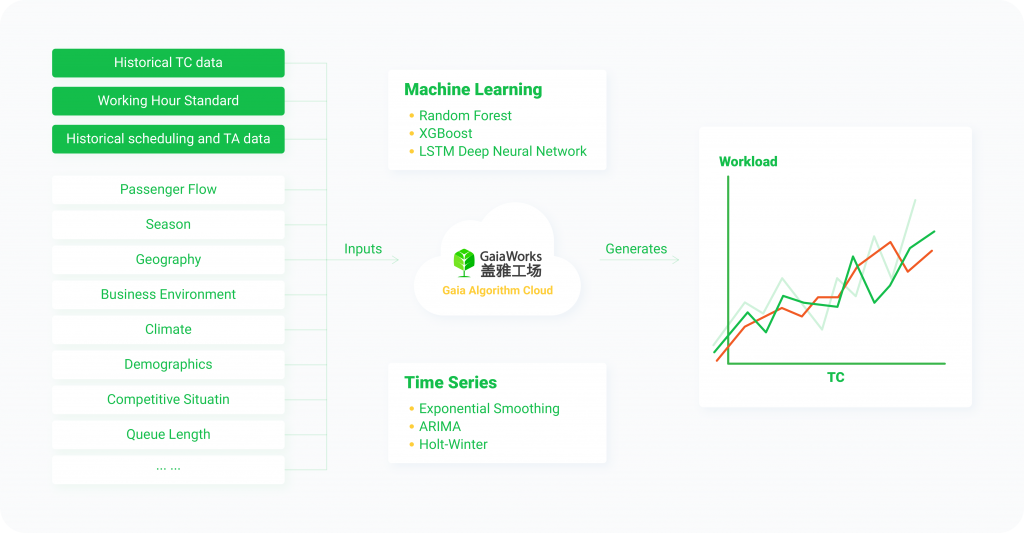
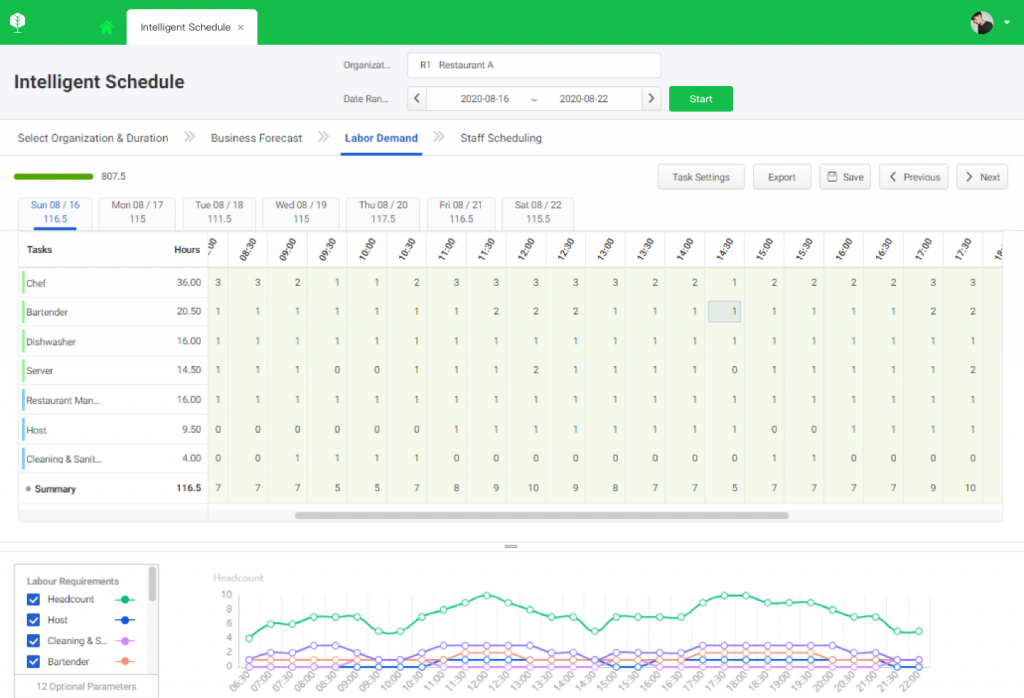
    Modern Workforce Management (WFM) platforms replace guesswork with data. The GaiaWorks Algorithm Cloud analyzes your historical data—sales figures, foot traffic, or production orders—to predict your exact staffing needs down to 15-minute intervals.

    Dashboard showing how to decrease labor costs with AI forecasting.

    Real-World Impact: A global fast-food chain saved an estimated $14M USD annually. By aligning staff levels strictly with demand, they were able to decrease labor costs significantly.

    2. Eliminate “Time Theft” and Payroll Errors


    Small errors add up fast. A few minutes of “buddy punching” or rounding errors in manual calculations can significantly inflate your payroll.

    The Solution: Automated Time & Attendance

    Digitizing your time tracking is the quickest win for cost control. GaiaWorks offers precise clock-in methods (GPS, Bluetooth, Face ID) and automatically calculates hours based on your specific pay rules.

    • Zero Calculation Errors: The system handles overtime, breaks, and holiday pay automatically.

    • Real-Time Visibility: Managers can see attendance anomalies instantly, not at the end of the month.

    3. Proactively Control Unnecessary Overtime


    Overtime is a helpful tool for emergencies, but it should never be a standard operating cost. If you are consistently relying on overtime to fill shifts, your scheduling process is broken.

    The Solution: Compliance Guardrails

    To decrease labor costs effectively, you need a preventative shield. The GaiaWorks Compliance Engine sets hard rules.With the GaiaWorks Compliance Engine, you can set hard rules that flag or block shifts that would trigger overtime pay.

    • Instant Alerts: If a manager tries to assign a shift that pushes an employee into overtime, the system warns them immediately before the cost is incurred.

    4. Schedule by Skill, Not Just Availability


    In manual scheduling, managers often just look for “warm bodies” to fill slots. However, putting a junior employee on a critical task can lead to slower output or quality issues, while putting a senior expert on a basic task is a waste of expensive talent.

    The Solution: Skills-Based Scheduling

    Optimize your labor spend by ensuring the right person is in the right place. GaiaWorks tracks the Skills & Certificates profile of every employee. The AI scheduling engine then assigns shifts based on proficiency, ensuring your most critical operations are staffed by your most capable people.

    Real-World Impact: A global FMCG leader saw a 20% increase in productivity and a 50% reduction in quality errors simply by implementing skills-based scheduling.

    5. Reduce the Hidden Cost of High Turnover


    Recruiting, onboarding, and training a new frontline employee is expensive. The primary driver of turnover? Inflexible, unpredictable schedules that make employees feel like they have no control over their lives.

    The Solution: Employee Empowerment Tools

    Give your team flexibility, and they will reward you with loyalty. The GaiaWorks Mobile App empowers employees to:

    • View schedules in real-time.

    • Swap shifts with qualified colleagues autonomously.

    • Request time off easily.

    When employees have control over their work-life balance, satisfaction goes up, and costly turnover goes down.


    The Smart Way to Decrease Labor Costs


    Controlling labor costs isn’t about squeezing your workforce; it’s about eliminating waste. By moving from reactive, manual processes to a proactive, AI-driven WFM strategy, you build a leaner, more profitable, and more resilient business.

    Are you ready to stop guessing and start optimizing? Schedule a personalized demo with our experts today to discover how GaiaWorks can transform your workforce efficiency.


    Smart Scheduling for Manufacturing: Swire Coca-Cola Case Study

    Smart Scheduling for Manufacturing: Swire Coca-Cola Case Study

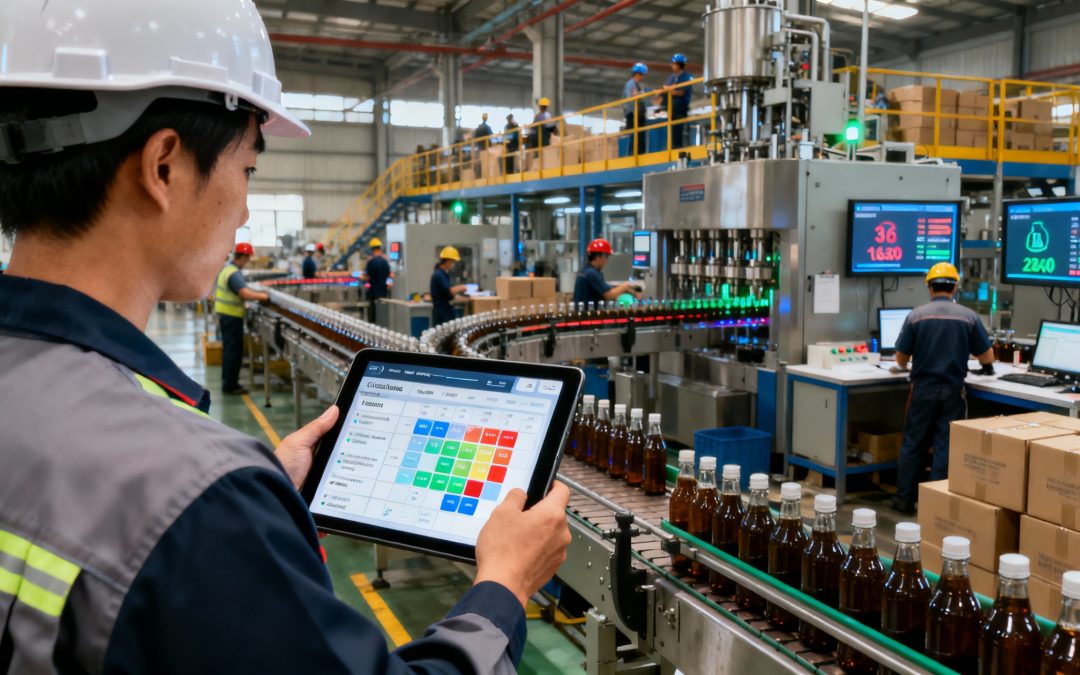
    Swire Coca-Cola deployed smart scheduling for manufacturing to solve its most complex labor challenge: automating multi-line, skilled-labor schedules. The GaiaWorks platform helped them meet peak season demand and boost efficiency—all without adding new staff.


    Results at a Glance


    • Scheduling Time Slashed 97%: Reduced weekly scheduling time for complex multi-line operations from 4-6 hours to just 10 minutes.
    • Scaled Labor Sharing: Expanded the strategic “labor sharing” program from just 2 production lines to all 6 lines, unlocking new capacity.
    • Achieved 100% Accuracy: Ensured all schedules were 100% compliant with complex skills, rotations, and multi-layered labor rules.
    • Met Peak Demand Without New Hires: Increased production flexibility to manage seasonal peaks and boosted overall capacity using the existing skilled workforce.
    • Enhanced Employee Development: Enabled a transparent, multi-skilling framework and clear development paths, boosting employee satisfaction.

    “Management philosophy and our foundational principles helped us get from 0 to 1. Smart scheduling (with GaiaWorks) helped us get from 1 to 10.”——— Swire Coca-Cola Management

    1761818515278

    The Challenge: The New Labor Problem in an Automated Factory


    In the age of Industry 4.0, many assume workforce management problems disappear. Swire Coca-Cola’s advanced facility shows this isn’t true. The facility’s operation relies on a smaller, elite group of highly-skilled technicians, which creates two critical business challenges:

    1. Peak Season Demand: The beverage business is highly seasonal. This creates intense peak seasons where the factory must produce more.

    2. Skilled Labor Scarcity: The required technicians are difficult to find and train. The factory cannot simply hire temporary staff to meet peak demand.

    The strategic answer was internal “labor sharing”—borrowing skilled staff from less-busy lines to support high-demand lines.

    This created the real challenge: Extreme Scheduling Complexity.

    • Intricate Rules: The factory runs a “3-shift, 2-rotation” system.
    • Skill Matching: Planners must match the precise skill and proficiency level for each borrowed employee.
    • Layered Constraints: The schedule must obey dozens of prioritized “strong” and “non-strong” rules (e.g., skill limits, hour limits, overtime caps, consecutive rest preferences, etc.).

    This complexity made the strategy impossible to scale. Manually creating a schedule for just two lines took 4-6 hours per week and was still not 100% accurate.


    The Solution: GaiaWorks’ Smart Scheduling for Manufacturing in Action


    Swire Coca-Cola had the right management philosophy but needed a technology engine to execute it. They launched the GaiaWorks Smart Scheduling module to automate their “labor sharing” initiative.

    This smart scheduling for manufacturing solution was configured to:

    1. Automate All Rules: The system digitized all of Swire Coca-Cola’s complex rules—from “strong” constraints like skill matching to “non-strong” preferences like minimizing disruptions.

    2. Optimize Shared Labor: The engine automatically finds the optimal, 100% compliant schedule, identifying which employees to borrow from which lines based on availability, skills, and business priority.

    3. Manage Skills: The solution provided a digital “skill tag” management system, giving planners instant visibility into who was qualified for which role.


    The Results: 4 Key Wins for from “Impossible” to “Effortless”


    The impact of the GaiaWorks platform was transformative, allowing Swire Coca-Cola to finally scale its core labor strategy.

    1. Immediate Efficiency & Accuracy

    The 4-6 hour manual scheduling nightmare vanished. The process now takes 10 minutes, and the resulting schedule is 100% accurate and compliant.


    2. Strategic Scalability (The “1 to 10” Leap)

    With automation, Swire Coca-Cola expanded its “labor sharing” program from the initial 2 lines to all 6 production lines.


    3. Capacity & Cost Control

    By efficiently sharing its existing skilled workforce, the factory boosted its overall production capacity and met peak seasonal demand without hiring a single new employee.


    4. Enhanced Employee Experience

    The platform provided a clear, online system for managing skills, allowing employees to pursue new development paths and increasing their satisfaction and retention.


    Struggling with complex schedules? See how GaiaWorks’ smart scheduling for manufacturing can automate your operations.


    Employee Scheduling: 9 Proven Tips for Better Results

    Employee Scheduling: 9 Proven Tips for Better Results

    Employee scheduling for frontline teams often feels like a high-stakes juggling act. You’re balancing business needs, budgets, and the complex lives of your employees—all while trying to keep your operation running smoothly. It’s not easy.
    The good news? It doesn’t have to be this difficult.
    Bad employee scheduling  isn’t just an inconvenience. In fact, it’s a primary cause of employee burnout, high turnover, and inflated labor costs. However, by adopting a smarter, more modern approach, you can transform employee scheduling from your biggest headache into your greatest strategic advantage.
    Here are nine simple, proven tips for more effective employee scheduling.

    1. Identify and Eliminate Bias in Your Employee Scheduling

    Unintentional bias is one of the quickest ways to erode team morale. When schedules are built manually, it’s easy to fall into habits. For example, giving the best shifts to the same people or assigning undesirable tasks to others without realizing it. Employees notice these patterns, which can lead to feelings of favoritism and resentment.
    The Fix: Use an objective, rule-based system. A smart scheduling platform like GaiaWorks uses an AI engine to distribute shifts based on objective rules you define—like skills, availability, and fairness. As a result, removing unconscious bias from the equation. intlliegent 8n 1

    2. Publish Schedules in Advance for Predictability

    One of the biggest stressors for hourly employees is schedule unpredictability. When schedules are posted just a few days (or hours) in advance, it becomes impossible for your team to plan their lives, whether it’s arranging childcare, scheduling appointments, or working a second job. Ultimately, This instability is a major driver of burnout and turnover.
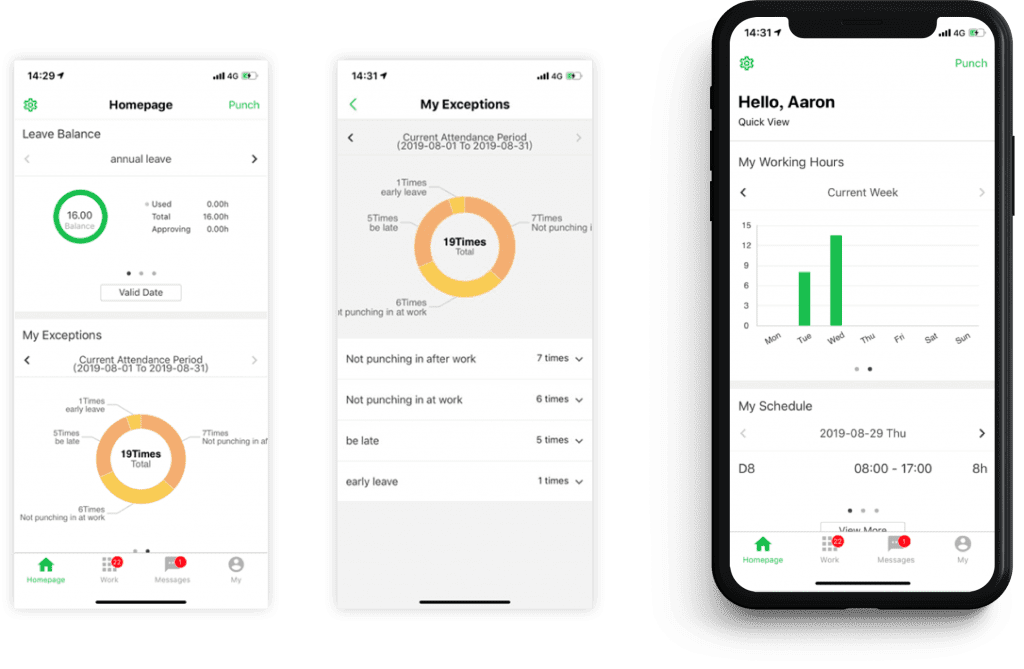
    The Fix: Commit to a consistent, advance scheduling cadence. With a modern workforce management platform, you can finalize and publish schedules weeks in advance. The GaiaWorks mobile app automatically notifies every employee the moment the schedule is live. This gives giving them the stability they need to balance work and life effectively.

    3. Know Your Business with Data, Not Guesswork

    Are you constantly overstaffed during quiet periods and understaffed during a rush? This is a classic sign of scheduling based on guesswork rather than data. Both scenarios are expensive—one wastes payroll, while the other leads to lost sales and burnt-out employees.
    The Fix: Use AI-powered demand forecasting. The GaiaWorks Algorithm Cloud acts as your operational crystal ball. It analyzes your historical business data—like sales figures, customer traffic, or production orders. It then creates a highly accurate Business Forecast of your labor needs, often down to 15-minute intervals. This allows you to build a schedule that perfectly matches labor to demand.
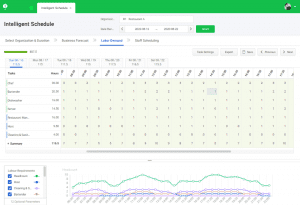
    intelligent schedule labordemand1 1

    4. Know Your Employees by Capturing Their Needs

    Your employees are not interchangeable. They have different skills, work preferences, and availability. A one-size-fits-all schedule that ignores these realities will only lead to endless requests for changes and a frustrated team.
    The Fix: Make it easy to collect and use employee preferences. Instead of juggling sticky notes and text messages, use a system where employees can input their availability and shift preferences directly. The GaiaWorks platform allows employees to set their preferred work times, and the AI will automatically consider these preferences when building the schedule. Therefore, it creates a win-win for you and your team.

    5. Centralize and Automate Schedule Communication

    Is your official schedule still a piece of paper tacked to a breakroom wall? In today’s mobile world, that’s no longer effective. It forces employees to call in or make a special trip just to check their hours, wasting everyone’s time.
    The Fix: Use a mobile app as your single source of truth. The GaiaWorks mobile app ensures everyone has 24/7 access to the most up-to-date schedule. Any changes you make are instantly pushed to their phones. This eliminates confusion and no-shows.

    mobileapp6

    6. Make Shift Changes Painless for Everyone

    Life happens. An employee gets sick, has a family emergency, or needs to change a shift for personal reasons. If your process for handling this is a chaotic flurry of phone calls and texts, you’re creating unnecessary stress for both your employees and your managers.
    The Fix: Empower employees with self-service shift swapping. The GaiaWorks app allows an employee to offer their shift to a pool of qualified colleagues. The system automatically checks for skill compatibility and overtime risk. Because of this, you only see pre-vetted, safe options to approve. This entire process can happen in minutes, not hours.

    7. Fill Open Shifts Instantly, Without the Phone Calls

    When a shift unexpectedly opens up, the last thing you want to do is start calling employees one by one. It’s inefficient. Plus, it often results in you pressuring someone to work who doesn’t want to.
    The Fix: Broadcast open shifts to qualified employees. With a single click in the GaiaWorks platform, you can offer an open shift to all available and qualified employees. The first person to claim it gets the shift. This is not only faster but also fairer, giving everyone an equal opportunity to pick up extra hours if they want them.

    8. Make the Schedule Accessible 24/7, From Anywhere

    Modern workforces are mobile. Your scheduling system should be too. If your team can only access their schedule or make requests when they are physically at work, you’re creating an unnecessary barrier.
    The Fix: Use a cloud-based platform with a dedicated mobile app. Whether it’s checking next week’s hours, requesting time off, or picking up a shift, the GaiaWorks app allows your employees to manage their work life from anywhere, at any time. This level of accessibility is now a baseline expectation for modern workplaces.

    9. Cross-Train and Use Skills-Based Employee Scheduling

    Are your most skilled employees working when you need them most? True excellence comes from matching skills to demand. You want your expert technician on duty with complex machinery, just as you want your top salesperson on the floor during peak hours.
    The Fix: Use skills-based scheduling. The GaiaWorks platform allows you to create a Skills & Certificates profile for each employee.The AI scheduling engine then uses this data to make smarter decisions, ensuring your most critical roles are always covered by a qualified expert. For instance, Nestlé used this approach to achieve a 20% increase in productivity and a 50% reduction in human-error-related quality issues.

    10. It’s Time for a Smarter Schedule

    Moving away from manual scheduling isn’t just about saving time. It’s about building a more efficient, profitable, and resilient operation. More importantly, your employees feel valued and respected. By leveraging the right tools, you can turn your biggest employee scheduling challenges into your greatest strengths.


    Smart Scheduling: 3 Ways to Fix Your Roster & Stop Burning Money

    Smart Scheduling: 3 Ways to Fix Your Roster & Stop Burning Money

    Key Takeaways

    • Fix the Real Problem: Bad schedules aren’t just an inconvenience; they actively fuel employee burnout, drive up turnover, and inflate labor costs. Smart scheduling addresses the root cause by creating fair, predictable, and flexible rosters that people can rely on.
    • Turn Scheduling into a Competitive Advantage: GaiaWorks transforms scheduling from a manager’s worst headache into a powerful operational tool. It uses predictive data to match the right people to the right work, preventing crises before they happen and freeing up leaders to focus on growth.
    • Backed by Real-World Results: This isn’t theoretical. Global leaders using GaiaWorks have achieved significant outcomes, including a 2% increase in production capacity, a 20% boost in productivity, and a 50% reduction in voluntary employee turnover.


    1. The Real Cost of a Bad Schedule (And Why Smart Scheduling is the Fix)

    For any manager of a frontline team, the weekly schedule is an endless puzzle. This is where Smart Scheduling can help. You’re juggling fluctuating demand, last-minute call-outs, and individual employee requests. It feels like a constant fire drill. However, the time you lose is only the beginning of the problem.
    This isn’t just an administrative headache. In fact, it’s a quiet drain on profitability.
    First, it starts with guesswork. Manual scheduling rarely gets staffing levels right. This leaves you overstaffed during quiet times and scrambling during a rush. As a result, you get wasted payroll and expensive overtime.
    That lack of a plan then trickles down to your team. Inconsistent hours make it impossible for employees to plan their lives. It sends a clear message: their time isn’t valued. Unfortunately, this is a direct path to employee burnout. Burnout is a top cause of poor performance and turnover. Replacing a single frontline worker is very expensive. So, you’re not just losing people;  you’re losing money.
    This bad cycle hurts your entire operation. A tired, disengaged team gives poor service. They make more mistakes. They are less safe. Meanwhile, your managers are too busy fixing the schedule. They have no time to focus on coaching, improving, or driving the business forward.

    2. A Smarter Way to Work: The Shift to Predictive Scheduling

    To break this cycle, you need to move from reacting to predicting. GaiaWorks enables this shift by transforming scheduling from a guessing game into a data-driven science.
    The old way is based on habit and intuition. The new way is based on a simple, powerful framework that answers three critical questions with data:
    1. How many people do you actually need? Our platform analyzes your past business data to accurately forecast future demand.
    2. Who are the right people for the job? Next, it matches the work to employees based on their skills, availability, and preferences.
    3. How can you keep improving? Finally, it connects scheduling data to performance, giving you the insights to optimize continuously.
    In this model, smart scheduling becomes your operational command center. It’s no longer about filling slots. Instead, it’s about making the single best decision for every shift to balance the needs of the business with the needs of your people.

    3. Inside the Engine: How GaiaWorks Makes the Complex Simple

    The power of the GaiaWorks platform lies in its ability to hide immense complexity behind a simple, intuitive experience for both managers and their teams.

    The Brains of the Operation: The Gaia Algorithm Cloud

    At the heart of our platform is an intelligent engine that does the heavy lifting.
    • It Predicts Your Future Needs: The algorithm looks at your past sales, foot traffic, or production orders. Additionally, It even considers external factors like holidays, weather, or local events to build a highly accurate forecast of your upcoming labor needs.
    • It Finds the Best Fit, Every Time: Once it knows what you need, the engine runs through millions of possibilities to create the optimal schedule. It automatically balances your business goals (like minimizing cost) with compliance rules, employee skills, and even individual shift preferences.
    intlliegent 8n 1

    Putting Managers Back in Control

    We give your managers the tools to stop being administrators and start being leaders:
    • One-Click Scheduling: For most situations, managers can generate a fair, optimized, and compliant schedule with a single click. For unique cases, an intuitive drag-and-drop interface makes manual adjustments simple.
    • Real-Time Visibility: A live dashboard shows managers what’s happening on the floor. This includes attendance and overtime risk.Therefore,  they can make smart decisions on the fly.
    • Automated Compliance: The system has labor laws and company policies built-in, automatically flagging potential issues before they become expensive problems.

    Giving Employees Flexibility and Fairness

    A schedule only works if it works for your people. Our mobile app is a top-rated tool in the APAC region. This is because it empowers employees:
    • Total Transparency: Employees can see their schedules instantly on their phones. No more confusion.
    • Control Over Their Time: The app makes it easy to request time off, swap shifts, and update availability. All this happens without a dozen phone calls. Simple requests can be handled in just 10 seconds.
    This two-way system builds trust. Fair, data-driven Smart Scheduling eliminates favoritism. Plus, self-service tools give employees a sense of ownership and respect.

    4. The Proof is in the Performance: Real Results from Industry Leaders

    The difference Smart Scheduling makes isn’t theory. It’s proven in the operations of some of the world’s top companies.

    Transforming Manufacturing Efficiency

    In manufacturing, where precision is everything. Here, the impact is immediate.

    CustomerKey Achievement with GaiaWorks Smart Scheduling
    Swire Coca-ColaIncreased overall production capacity by 2% and boosted scheduling efficiency by 97% through automated, cross-line labor sharing.
    NestléBoosted productivity by 20%, cut human-error-related quality issues by 50%, and reduced employee turnover by 33%.


    Driving Agility in Retail

    In the fast-paced world of retail, Smart Scheduling is a game-changer. A global fast-food chain with over 4,000 stores deployed GaiaWorks to schedule its 20,000+ employees. They cut their weekly scheduling time from 8 hours down to just 2 and are projected to save an estimated ¥100 million RMB (approx. $14M USD) in annual labor costs through better optimization.

    5. Smart Scheduling: Your New Competitive Advantage

    In today’s market, your ultimate advantage is adapting quickly and retaining your best people. Scheduling is no longer just a back-office task. Instead, it’s a strategic part of your core operations.
    Investing in a platform like GaiaWorks is an investment in a more resilient, efficient, and people-centric way of doing business. It creates a virtuous cycle where data leads to better schedules, better schedules lead to happier and more productive employees. And, a more stable workforce drives better business results.
    The question is no longer if you can afford to invest in smart scheduling, but how much longer you can afford the costs of not investing.
    Ready to see the difference for yourself?(/request-demo) to learn how GaiaWorks can turn your biggest scheduling challenges into your greatest strengths.