AI in Workforce Management: A 4-Step ROI Guide (2026)
The era of “AI experimentation” is ending. In 2026, the focus on AI in workforce management is shifting. It is no longer about hype. It is about results.
CFOs and HR leaders are asking a hard question: “Where is the money?”
They do not want cool features. They want measurable returns. Therefore, AI in workforce management must optimize the “Time-Skill-Motivation” equation. It must save money and increase efficiency.
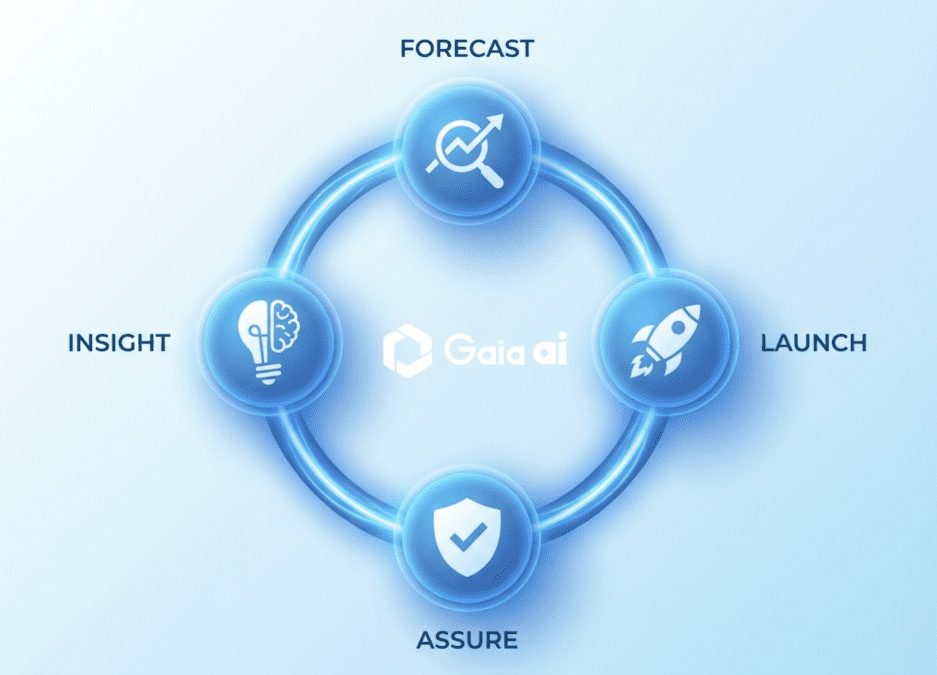
At GaiaWorks, we developed the FLAI Model. This is a practical, four-step framework. It takes your workforce from reactive chaos to proactive optimization. Here is how you can use it to drive real business value.
Step 1: Forecast – Predict with Precision
Many retailers still rely on “gut feeling” to build rosters. This is risky. Consequently, they face overstaffing during quiet periods and understaffing during rushes.
GaiaWorks solves this. Our prediction engine uses deep learning to analyze historical data.
The Input: It looks at POS data, footfall, and even weather forecasts.
The Output: It generates highly accurate labor demand curves.
The ROI: You eliminate the “safety buffer.” For example, reducing overstaffing by just 1% significantly improves profit margins. This is the power of AI in workforce management.
Step 2: Launch – Automate Execution
Creating a schedule is a mathematical nightmare. Managers must balance labor laws, employee preferences, and skills. For a human, this takes hours.
However, the “Launch” phase changes this. Our Smart Scheduling Algorithm solves the puzzle in seconds.
Multi-Objective Optimization: You set the strategy (e.g., “Cost First”). Then, the AI builds the optimal roster.
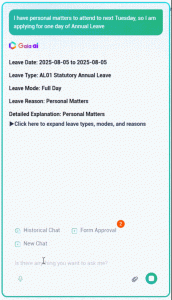
The Gaia AI Assistant: We empower employees. An employee simply says to the app, “Help me apply for leave tomorrow.” The AI handles the request instantly.
The ROI: This reduces administration time by 90%. Managers can finally focus on customers, not spreadsheets.
Step 3: Assure – Protect with Compliance
In markets with strict Labor Laws, mistakes are expensive. A single oversight can lead to fines.
GaiaWorks acts as your 24/7 internal auditor. This is a critical function of AI in workforce management.
Pre-emptive Blocking: The system flags rosters that violate rules before you publish them.
Smart Approvals: The AI acts as a gatekeeper. It analyzes overtime requests against real-time data. If it sees a risk, it warns the manager.
The ROI: You achieve zero penalties for non-compliance. Furthermore, you strictly control unnecessary overtime costs.
Step 4: Insight – Decide with Data
Traditional dashboards are often confusing. Managers lack the time to dig through spreadsheets.
GaiaWorks introduces ChatBI. This allows you to talk to your data.
Ask Your Data: A manager asks, “Why is Store B’s overtime cost high?”
Instant Answer: The AI analyzes the data. It replies: “Store B had a 15% increase in sick leave.”
The ROI: Decision cycles become faster. You identify and fix cost leaks in minutes, not weeks.
Conclusion: From Bystander to Practitioner
The future of AI in workforce management is not about replacing humans. It is about giving your workforce a “Super-Brain.”
The FLAI model—Forecast, Launch, Assure, and Insight—provides a clear path. It helps you modernize your operations.
In 2026, do not just buy AI. Buy results.
Ready to calculate your ROI?