How Mobile ESS Drives Frontline Shift Stabilization
Jun 24, 2026|8 min read
Even the best operational strategies can fall apart when they hit the reality of a busy shop floor, retail outlet, or distribution center.
In complex, cross-border labor markets like Singapore, Hong Kong, and Australia, enterprise executives frequently design elaborate compliance and capacity models at the corporate level. Yet, as highlighted in JLL’s insights on boosting wellbeing and driving productivity for APAC frontline employees, a critical talent crisis is emerging on the operating edge. Rigid scheduling and a lack of flexibility drive frontline turnover rates as high as 48% annually. On the floor, localized supervisors routinely find themselves battling sudden, unplanned absenteeism—with most managers only receiving notice of a worker’s absence three hours before a shift begins.
To cope with this lack of visibility, supervisors resort to defensive over-scheduling, maintaining bloated headcount buffers to hedge against last-minute call-outs. This directly erodes margins. In labor-intensive environments, excessive scheduling safety nets mean that a significant portion of the scheduled labor force operates under capacity, driving up cost-per-unit metrics and throwing operating plans off course.
To stop this margin leak, enterprises must move beyond passive scheduling policies. They must put an active, compliant scheduling interface directly into the hands of the frontline workforce.
The Desktop Trap: Why Legacy Portals Fail the Frontline
Traditional Employee Self-Service (ESS) systems fail because they were designed for deskbound employees. Built as administrative appendages to legacy Human Capital Management (HCM) platforms, these tools are often little more than desktop interfaces from previous decades dressed up with a basic mobile login.
For a retail associate on a short break or a manufacturing operator on a loud production floor, navigating a complex, multi-click system to execute a basic task is impractical. When simple actions—such as checking a schedule, requesting leave, or contesting a shift variance—require deep menu navigation, workers abandon the software. They revert to sending unsanctioned instant messages, calling supervisors directly, or writing shift requests on paper.
When adoption fails, the enterprise continues to pay for software licenses while manual scheduling administrative burdens remain entirely unresolved.
True frontline shift stabilization requires a task-oriented, mobile-native System of Engagement. Operating directly on top of legacy Systems of Record (ERPs and Core HR databases), this layer uses AI-Powered HR Automation to translate static contract parameters into fluid, real-time coordination tools. By designing a frictionless mobile interface, enterprises shift the administrative workload of schedule management from centralized HR and localized managers to a self-organizing, employee-led ecosystem.
1. Collaborative Shift Swapping and Algorithmic Callback
One of the largest drains on a supervisor’s time is resolving sudden schedule conflicts. When a worker falls ill or experiences a personal emergency, the manager is typically forced to spend hours calling off-duty staff, manually checking availability, and rewriting paper schedules.
An advanced mobile ESS app resolves this by enabling peer-to-peer shift swapping. Frontline workers can independently exchange or transfer shifts via their mobile devices.
However, open peer-to-peer swapping without structural guardrails creates massive legal and operational risks. To prevent this, the scheduling engine automatically evaluates the compliance and skill parameters of both workers before a swap is approved. The system cross-references:
Individual Skills and Certificates: Ensuring the replacement worker possesses the exact qualifications, licenses, and default position settings required for that specific shift.
Compliance Constraints: Verifying that the swap will not violate statutory rest-day limits, maximum continuous working days, or minimum rest-window intervals between shifts.
Operational Safeguards: Confirming that the trade does not drop the specific line or store below its mandatory minimum headcount.
To prevent repetitive, chaotic scheduling adjustments, the platform utilizes a closed-loop callback mechanism. When high volumes of manual swaps are detected for specific personnel, the system’s background analytics engine flags these occurrences. During subsequent schedule generation cycles, these patterns are called back into the pre-scheduling phase, automatically updating the employee’s default shift availability and preferences. This proactive adjustment aligns the roster with actual worker availability before publication, reducing post-publication shift-swapping rates by 29% (Telecom Center Case).
2. The “Wish Shift” Framework and Preference Matching
Forcing rigid schedules from the top down directly drives voluntary frontline turnover. Frontline workers are no longer accepting roles that offer no say in their working hours.
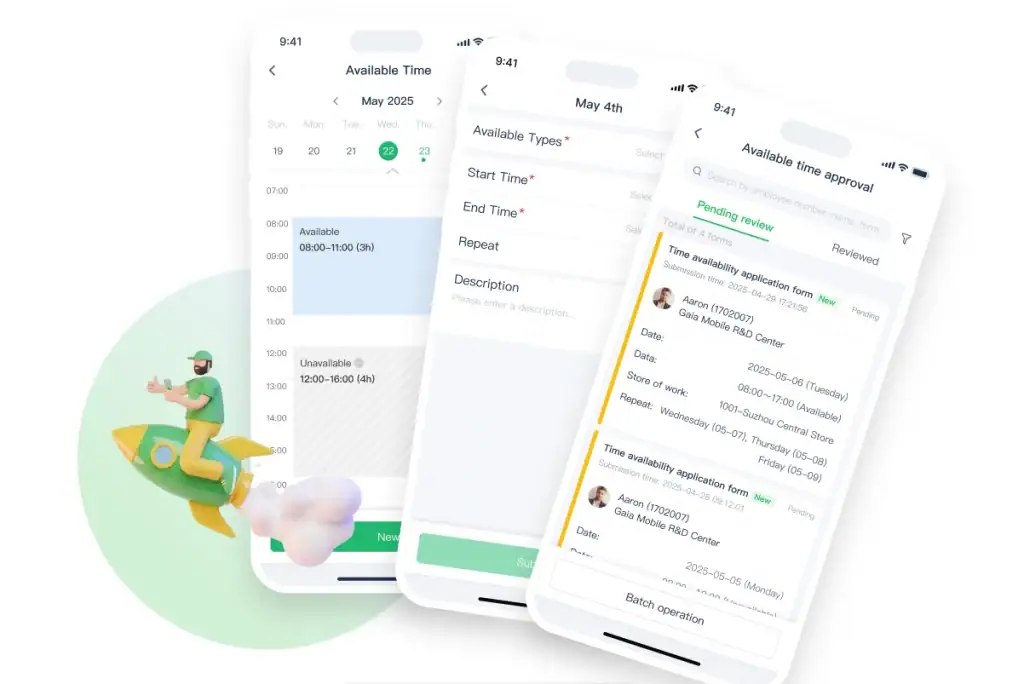
To bridge the gap between corporate staffing demands and employee well-being, the mobile interface introduces the “Wish Shift” framework. Through the app, frontline workers can log specific scheduling preferences for the upcoming month.
Rather than letting workers choose random schedules that disrupt operations, the system allows employees to select up to two primary work wishes. These wishes can include:
A preference for specific shift blocks (such as early morning or late evening slots).
A request to work alongside a specific peer or team member, which is a major driver of social cohesion and retention in high-stress retail and logistics environments.
The scheduling algorithm then automatically cross-references these worker-submitted preferences with predicted business volume and localized demand curves. While satisfying 100% of employee wishes is statistically impossible, prioritizing these inputs during automated roster generation balances shift distributions, ensures equitable rest schedules, and significantly reduces the scheduling friction that leads to frontline resignations.
3. Algorithmic Work-Hour Equalization
In manual scheduling environments, shift distribution is often uneven. Without systemic oversight, localized managers frequently allocate high-value or overtime-eligible hours to a small group of favored workers. This creates two distinct operational liabilities: excessive overtime payouts for a segment of the workforce, and under-utilized contracted hours for others, leading to frustration, perceived bias, and eventual attrition.
The mobile ESS app eliminates this friction through automated work-hour equalization. The scheduling engine monitors cumulative monthly and quarterly work hours across the entire frontline directory in real time.
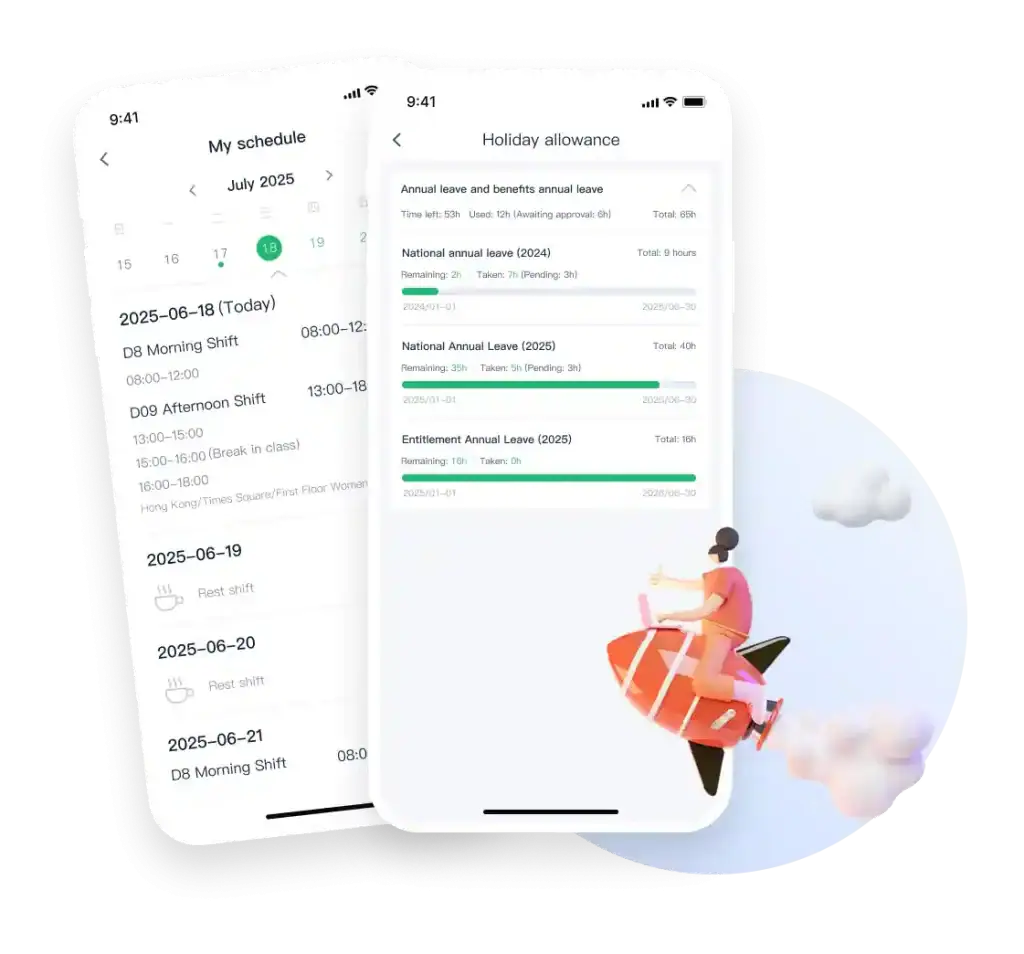
By tracking contracted hour baselines alongside quarterly legal limits, the system automatically identifies workers with surplus capacity. When open shifts become available or when the base schedule is built, the algorithm automatically routes those hours to under-utilized contract staff first. Conversely, it restricts additional scheduling for employees approaching their work-hour caps. The system simultaneously calculates market-specific holiday allowances and shift differentials, ensuring accurate premium payouts. This automated balance controls overtime spend, ensures fair earnings distribution, and keeps operations compliant with local labor laws.
4. Frontline-Specific Mobile Onboarding and Field Services
A frontline worker’s relationship with an employer begins long before their first official shift. Yet, traditional onboarding is a slow, paper-heavy process that delays time-to-productivity and increases early-stage attrition.
By extending the ESS ecosystem to the pre-onboarding phase, enterprises can digitize the entire new-hire journey. The mobile interface integrates directly with enterprise communication platforms, allowing candidates to complete essential onboarding steps on their own devices before day one:
Pre-Onboarding Self-Service: Supported by rigorous Cloud-based Security/Data Privacy protocols, new hires can securely scan ID documents, upload required professional licenses, input direct deposit banking information, and complete emergency contact profiles. This data automatically flows into the central personnel file, eliminating manual entry errors by HR while safeguarding sensitive personal records.
Precision Employee Care: The system schedules automated, targeted communication checkpoints. On the employee’s first day, a personalized welcome and facility orientation notification is pushed to their device at the required time. Milestones such as birthdays or work anniversaries are acknowledged automatically via plain-text notifications, maintaining a professional yet supportive employee touchpoint.
Field-Level HR Operations: Once on-site, the mobile app serves as the single portal for all field interactions. Workers can view digital watermark payroll slips on demand, submit immediate attendance corrections, file expense reimbursements, and appeal punch-card variances directly from the floor. This instant dispute resolution prevents payroll errors from turning into labor disputes.
?️ Enterprise Trust & Compliance Shield
To support cross-border enterprises, the platform relies on Cloud-based Security and Data Privacy infrastructure, powered by geo-redundant data hubs in Singapore and China. Core systems maintain top-tier international compliance certifications to satisfy strict IT audits, including:
ISO 27018 & ISO 27017 (Public Cloud PII Protection & Cloud Controls)
SOC 2 Type II (Independent AICPA Security and Confidentiality Attestation)
ISO 27001:2022 & ISO 20000-1:2018 (Information Security & IT Service Management)
Field-Tested Outcomes: Real-World Enterprise ROI
Across the APAC region, enterprises deploying mobile-native Systems of Engagement see direct bottom-line impact:
Telecommunications Customer Service Center: A leading global telecom consumer hub struggled with low scheduling efficiency and high agent attrition due to perceived unfairness in shift rotations. Following the deployment of mobile preference collection and automated peer-to-peer shift swapping, overall scheduling efficiency increased by 377%—saving supervisors hours of administrative planning. Overtime hours were cut in half, and the post-publication shift swap rate fell by 29% due to better pre-scheduling matching.
Multinational Retail and Athletic Apparel Group: A major retail brand with a network of 50 flagship regional stores faced high manager burnout and inconsistent floor coverage. By launching localized, demand-driven scheduling on mobile, matching shift structures with store foot traffic and worker preferences, overall workforce efficiency optimized by 12% and store-level customer satisfaction scores rose by 8% within a 12-week deployment cycle.
Global Beverage Bottling Operation: A premier beverage bottling plant with multiple complex production lines struggled to balance capacity shifts during peak seasonal demand. By implementing a centralized database of employee skills on mobile for real-time, cross-line labor sharing, weekly manager scheduling administrative time dropped from 4 to 6 hours down to just 5 minutes, while production capacity climbed by 2% with zero scheduling-related labor grievances.
Stabilizing the Frontline Edge
Relying on manual, disconnected spreadsheets to coordinate thousands of frontline workers in a complex labor market is a major operational liability. Unplanned absences and rigid scheduling systems trigger a compounding loop of employee burnout, service failures, and high attrition that erodes operational margins.
By implementing an agile mobile System of Engagement on top of your legacy databases, your organization can design stability directly into daily operations. This approach reduces the administrative burden on managers, maintains compliance with localized labor codes, and turns frontline scheduling into a true competitive advantage.
Maximize your operational efficiency today. Contact GaiaWorks to discover how our mobile ESS and scheduling solutions can bring stability to your frontline teams.