Beyond the Timeclock: Navigating Multi-Store Staff Scheduling Chaos and Compliance in APAC Retail Operations
In frontline retail environments, workforce management has evolved far beyond the boundaries of recording simple clock-in and clock-out times. Retail operations are highly dynamic networks, defined by frequent shift transitions, fluctuating hourly foot traffic, and a highly diverse labor mix. Staffing demands shift not only by the day, but by the hour, making traditional attendance-tracking methods obsolete.
Managing this operational volatility is particularly complex across the Asia-Pacific (APAC) region. Enterprise retailers here operate under a unique paradox: they must coordinate massive, highly fragmented workforces—comprising full-time, part-time, and flexible shift staff—while navigating a complex web of hyper-localized labor regulations. When labor management is handled through manual staff scheduling, fragmented store-level spreadsheets, or lightweight mobile apps, the consequences are immediate. Retailers face rising labor leakage, operational inefficiencies, high staff turnover, and severe compliance risks.
To protect operating margins, guarantee regulatory compliance, and deliver a seamless employee experience, enterprise retailers across APAC must shift from passive time-keeping to automated, compliance-first workforce optimization.
The Four Core Challenges in Enterprise Retail Workforce Management
Large-scale, multi-outlet retail operations are highly vulnerable to systemic workforce inefficiencies. When organizations scale across cities, provinces, or countries without a centralized, enterprise-grade workforce management platform, four critical bottlenecks inevitably emerge.
1) High-Velocity Shift Fluctuations & Part-Time Allocation
Retail stores operate across extended hours, requiring complex scheduling models to cover morning setup, peak trading hours, and evening closing routines. Staffing requirements are highly sensitive to external variables such as seasonal promotions, holiday surges, and local weather patterns.
Managing a dynamic mix of full-time professionals and part-time workers manually creates significant operational friction:
- The Manual Scheduling Tax: Store managers spend hours every week drafting schedules in Excel, sacrificing time that should be spent on the sales floor coaching staff and driving revenue.
- Under-scheduling and Over-scheduling: Failing to match labor capacity with real-time customer traffic leads to understaffed floors during promotional peaks—causing lost sales and customer dissatisfaction—or idle staff during low-traffic periods, which drains profitability.
- Communication Friction: Last-minute shift changes or replacement requests are often managed through informal chat groups. This lacks an audit trail, causing overlapping schedules, missed shifts, and high employee frustration.
2) Decentralized Branch Operations & Isolated Attendance Data
For retail groups managing hundreds or thousands of stores, operational consistency is a constant challenge. Individual store managers often treat their outlets as independent islands, using localized methods (ranging from paper rotas to instant messaging apps) to track attendance and manage shifts.
- Headquarters Blind Spots: Because attendance data is siloed at the store level, headquarters lacks real-time visibility into group-wide labor costs, scheduled hours versus actual hours worked, or real-time labor utilization rates.
- Inconsistent Branch Metrics: Without standardized tracking, operational gaps widen between high-performing and underperforming branches, making strategic, data-driven workforce planning impossible.
- Payroll Bottlenecks: At the end of every payroll cycle, HR teams must manually collect, verify, and consolidate fragmented attendance records from different stores. This slow process is prone to data-entry errors, leading to costly payroll disputes.
3) Multi-Jurisdictional Payroll & Compliance Strain
The APAC region is home to some of the most complex, rapidly changing labor laws in the world. Enterprise retailers operating across multiple territories must comply with diverse regional and municipal labor mandates.
- Complex Local Regulations: In Hong Kong, the “Employment Ordinance (Continuous Contract 417/468 Rule)“ requires meticulous tracking of consecutive working hours for part-time employees to determine their eligibility for statutory benefits. In Taiwan, calculating overtime pay involves complex tiered multipliers depending on whether the hours were worked on regular workdays, rest days, national holidays, or off-days.
- Complex Allowance Schemes: Retailers rely on complicated allowance structures—including late-night shifts, holiday premiums, multi-tier split shifts, and skill-based differentials.
- The Error Penalty: Relying on manual calculations to process these multi-jurisdictional rules leaves retailers highly vulnerable to regulatory penalties, wage-and-hour lawsuits, and systemic employee dissatisfaction.
4) Identity Fraud and Attendance Leakage at Scale
Accurate time-tracking data is the baseline requirement for profitable store operations and fair compensation. Yet, many retail locations still rely on legacy hardware, such as plastic swipe cards or basic fingerprint readers, which are highly vulnerable to errors and manipulation.
- Biometric Failures and Inefficiencies: Fingerprint scanners frequently fail in environments where employees handle merchandise, food, or chemical cleaners, leading to missed records and manual correction queues.
- Proxy Clock-ins (Buddy Punching): In stores with shared physical hardware or unverified mobile clock-ins, employees can easily clock in on behalf of absent colleagues, resulting in direct financial losses from unauthorized paid hours (labor leakage).
- Hardware Maintenance Costs: Installing, maintaining, and networking dedicated biometric devices across a vast store network is highly expensive, especially when factoring in the IT support needed to resolve offline devices and data sync issues.
Why APAC Enterprise Scale Demands More Than a Lightweight Mobile App
Many lightweight, app-based workforce management tools are designed for small-to-medium businesses (SMBs) with basic scheduling needs. While an agile app might work for a single-site boutique, it fails under the operational, legal, and volume demands of an enterprise retail network.
- High Concurrency and Scalability: Enterprise retailers need platforms that can process hundreds of thousands of daily shifts, database queries, and real-time clock-ins without lag or system downtime.
- Enterprise-Grade Integration: Enterprise systems must integrate natively with core IT ecosystems, seamlessly syncing master employee data and financial ledgers with ERP systems like SAP and Oracle, as well as complex payroll engines.
- Comprehensive Security & Compliance: Lightweight apps lack the advanced security protocols, data residency configurations, and granular, role-based access controls required by multi-national corporations.
- The Deep Compliance Engine: While basic apps can record clock-in times, they cannot automatically interpret localized labor codes (such as Hong Kong’s 417/468 rule or Taiwan’s tiered overtime multipliers) or automatically convert raw clock-ins into audit-ready payroll data.
The Enterprise Blueprint for APAC Workforce Optimization
To resolve these operational challenges, enterprise retailers must replace outdated, manual processes with a unified, cloud-based platform. GaiaWorks delivers an enterprise-grade workforce management solution tailored specifically for the APAC retail landscape, transforming staff scheduling from an administrative burden into a competitive advantage.
1) Transition from Reactive Scheduling to AI-driven Demand Forecasting
Instead of relying on gut feeling or historical templates, GaiaWorks enables store managers to build optimized schedules driven by real-time business data.
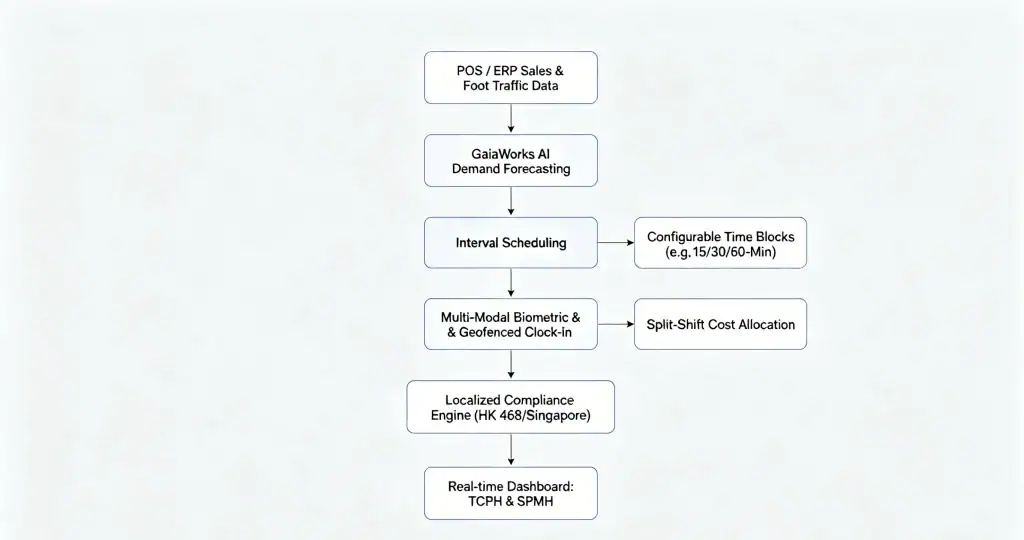
- Data-Driven Staffing Standards: The system integrates directly with store POS systems, foot traffic counters, and ERP systems to ingest historical sales data and transaction volumes.
- Optimized Work Schedules: Store managers can establish multi-tiered staffing models based on expected traffic. For example, if hourly foot traffic is forecasted at 0 – 100 customers, the system suggests a baseline schedule of two sales associates. If traffic is projected at 100 – 200 customers, the system automatically adjusts the requirement to three associates per shift.
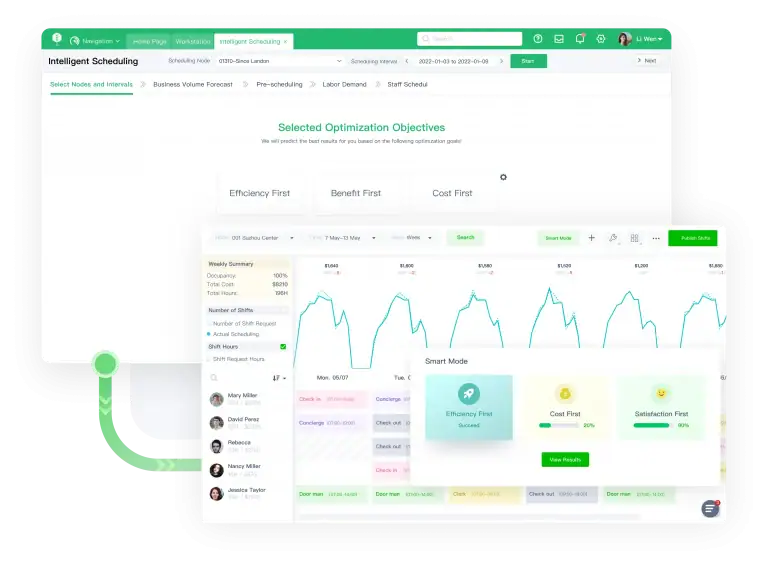
- One-Click Automated Scheduling: Using a powerful rules engine, the system automatically generates optimal schedules. It analyzes multiple factors simultaneously—including employee contract types, skill certifications, availability preferences, localized labor limits, and store labor budgets—to place the right employee in the right place at the lowest cost.
- Dynamic Open Shifts: When unexpected labor shortages occur, managers can instantly publish open shifts to qualified team members. The system automatically screens applicants for compliance and cost impact before allowing managers to approve the shift.
2) Centralized Multi-Site Intelligence & Cross-Store Labor Optimization
GaiaWorks dismantles operational silos by consolidating workforce data across all store locations into a single, cloud-based command center.
- Unified Headquarters Visibility: Regional managers and corporate executives gain real-time visibility into total labor hours, overtime trends, and budget compliance across the entire retail network.
- Cross-Store Staffing (Labor Sharing): When a high-traffic store experiences a sudden staffing shortage, managers can use the “Cross-Store Borrowing” feature. The platform analyzes nearby store locations, identifies qualified, off-duty employees, and allows managers to transfer them to cover the open shift. The system automatically tracks the transfer, ensuring compliance with local travel-time policies.
- Seamless Shift Swapping: Employees can request shift swaps directly through the GaiaWorks Employee Self-Service (ESS) mobile app. Once another qualified team member accepts the swap and the manager approves it within the app, the schedule is instantly updated and synced to the central database, removing the risk of communication gaps.
3) The Hyper-Localized APAC Compliance & Rules Engine
A core differentiator of the GaiaWorks platform is its ability to handle complex compliance requirements. It features a robust, multi-layered calendar and compliance rules engine built specifically for the diverse regulatory landscapes of APAC.
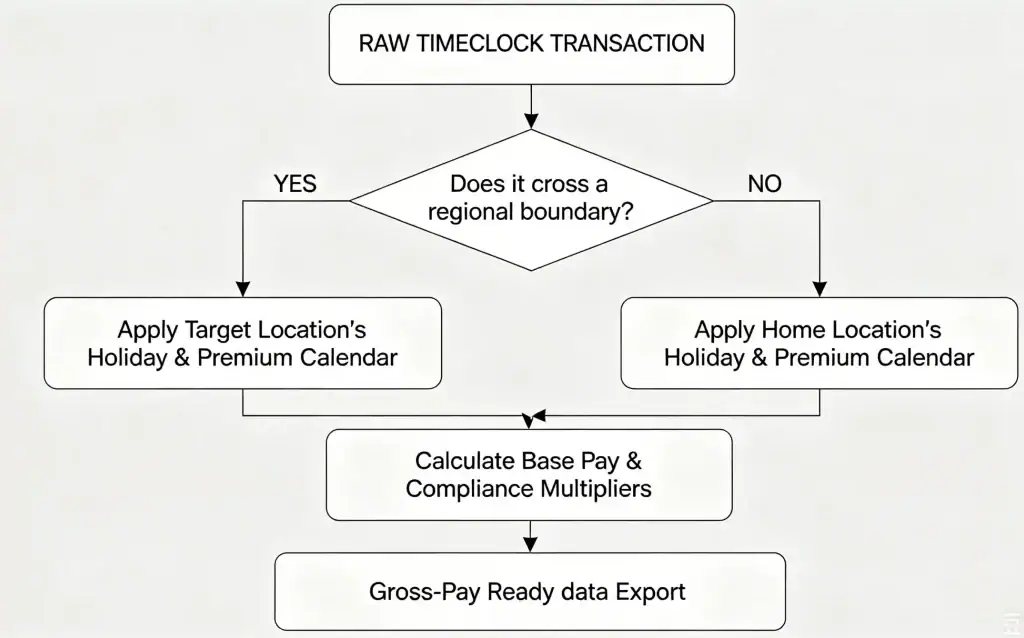
- Multi-Layered Calendar Configurations: The platform supports regional and cultural calendars (such as Minority Calendars in China or specific religious holidays in Southeast Asia), ensuring that local public holidays are automatically recognized and factored into overtime calculations.
- Hong Kong 417/468 Compliance Tracking: The platform continuously tracks consecutive hours worked by part-time and flexible employees. It alerts HR before an employee triggers the threshold, allowing managers to adjust schedules to control benefit costs or proactively manage full-time conversions.
- Taiwan Labor Standards Administration: GaiaWorks automates complex Taiwanese payroll logic, including precise overtime calculations for rest days, flexible work hour rules, and tracking of statutory personal leave.
4) Multi-Modal, Anti-Spoofing Authentication & Labor Accounting
To eliminate labor leakage and ensure high data accuracy, GaiaWorks offers a variety of flexible, hardware-free, and anti-spoofing clock-in methods that fit naturally into fast-paced retail workflows.
- Next-Gen Location & Network Verification: Employees can clock in directly from their personal mobile devices, verified by secure geofencing and store Wi-Fi network handshakes. To prevent proxy clock-ins, each employee account is locked to a single, verified mobile device.
- BLE Bluetooth Cloud Boxes & Dynamic QR Codes: Stores can install low-power, cost-effective Bluetooth Cloud Boxes or display dynamic QR codes on in-store screens. Employees must be physically present within the designated zone to scan and log their attendance, completely eliminating remote clock-in fraud.
- Enterprise App Integration: GaiaWorks integrates directly with popular corporate messaging platforms, such as WeChat Work and Lark, allowing employees to access schedule details, submit leave requests, and clock in within their daily communication apps.
- Granular Labor Cost Allocation (Labor Accounts): For employees who work across different departments or locations during a single shift—such as a grocery clerk who spends four hours stocking shelves and four hours working the checkout counter—GaiaWorks utilizes a “Labor Account” system. The platform automatically splits and attributes their hours and labor costs to the correct cost centers, giving finance teams precise, audit-ready labor cost tracking.
Case Study & Strategic ROI
To understand the real-world impact of enterprise-grade workforce management, consider the operational transformation of a leading Global Quick-Service Restaurant (QSR) Brand.
The Scale of the Challenge
Operating in the high-velocity, high-volume food service sector, this iconic QSR brand faces incredibly complex operational demands.
- In Hong Kong: The brand operates over 250 stores with a workforce of 16,500+ employees. High-volume locations handle peak volumes of up to 1,000 customers per hour, requiring scheduling across 15 distinct job roles and specialized skill certifications (e.g., food safety, barista, kitchen line), while managing the compliance requirements of Hong Kong’s 418/468 employment ordinance.
- In Mainland China: The brand scaled its operations to cover 3,500+ stores and a massive workforce exceeding 180,000 employees.
To replace fragmented, manual processes and improve operational control, the brand deployed GaiaWorks’ automated scheduling, real-time attendance, and compliance-first platform.

The Solution: Data-Driven Optimization & Instant Execution
By implementing GaiaWorks, the brand integrated its live POS transaction data directly into its scheduling workflows, enabling dynamic scheduling in intervals in required time blocks.
Store managers no longer build schedules based on guesswork. Instead, the platform automatically forecasts labor requirements by matching projected customer volumes with available staff, certified skills, and local compliance rules. On the sales floor, employees use the GaiaWorks ESS mobile app to view their schedules, clock in securely, and request shift swaps instantly.
The Business Outcomes
- Administrative Efficiency: The administrative time required for store managers to create and adjust weekly schedules was reduced by 75%, allowing them to focus more time on customer service and team training.
- Significant Financial Impact: Better labor allocation, reduced labor leakage, and optimized cross-store staffing combined to deliver over HKD 100,000,000 in annualized operational savings across Mainland China and Hong Kong.
- Precise Payroll Data: The time required to collect, verify, and process attendance data was drastically reduced. The platform achieved 99% accuracy in translating raw clock-ins into “Gross-Pay Ready” records, virtually eliminating payroll discrepancies and manual corrections.
- Flawless Compliance: The brand achieved a 100% compliance rate with local labor regulations (including Hong Kong’s 417/468 ordinance) even during peak operating periods, protecting the brand from legal risks and safeguarding employee trust.
Data-Driven Decision Making
A key benefit of a centralized, enterprise-grade workforce platform is the ability to turn raw attendance and transaction data into actionable business intelligence. GaiaWorks provides specialized dashboards designed for key roles within the retail organization.
1) The Store Manager: Balancing Service Quality and Labor Costs
Store managers need real-time data to make fast, on-the-floor staffing decisions. The GaiaWorks Store Manager Cockpit integrates attendance, scheduling, and transaction data to provide key performance indicators:
- Transactions Per Clock Hour (TCPH): This metric measures the number of customer transactions processed per hour of scheduled labor. If actual TCPH is much higher than planned, the store is understaffed, risking long wait times and poor service. If TCPH is too low, the store is overstaffed, driving up labor costs.
- Sales Per Man Hour (SPMH): This KPI tracks revenue generated per hour of labor on the floor. Comparing actual SPMH against target models helps managers evaluate the financial efficiency of their schedules and adjust shifts mid-day to optimize profitability.
2) The Regional Director Dashboard: Standardizing Performance Across Branches
For regional and operations directors managing multiple locations, standardizing performance and controlling labor costs is critical.
- Operational Cost Variance: This view provides a real-time comparison of actual labor costs against budget allocations across different stores and regions.
- Labor Sharing Effectiveness: Tracks the volume and cost-benefit of employees shared between locations, helping directors identify regions with structural labor imbalances.
- Scheduling Compliance & Overtime: Monitors overtime trends and scheduled hours versus actual hours worked, helping regional managers coach store leaders who consistently exceed their labor budgets.
3) The Executive Suite View: Strategic Workforce Planning
For C-level executives, workforce management is a key driver of corporate strategy and financial performance.
- Labor Cost to Revenue Ratio: Provides a high-level view of how labor investments impact overall revenue and profitability.
- Strategic Labor Structure Analysis: Helps executives evaluate the cost-effectiveness of their staffing mix (such as the ratio of full-time to part-time staff) to guide long-term staff scheduling planning.
- Compliance & Risk Mitigation: Gives compliance and legal officers real-time visibility into labor compliance rates across the entire enterprise, protecting the brand from costly labor disputes and regulatory penalties.
Conclusion
For enterprise retailers operating across the diverse markets of the Asia-Pacific region, managing a high-volume, multi-site workforce is a complex operational challenge. Relying on legacy systems, paper rosters, or lightweight, single-feature apps exposes companies to rising labor leakage, high staff turnover, and severe compliance risks.
True workforce optimization requires an enterprise-grade platform capable of connecting live operational data with intelligent staff scheduling, secure biometric verification, and localized compliance rules.
By automating scheduling, centralizing multi-site operations, and ensuring strict compliance with local labor laws, GaiaWorks helps APAC’s leading retailers eliminate operational inefficiencies, control labor costs, and build a more engaged, productive workforce.
Ready to transform your retail operations and eliminate shift chaos? Contact GaiaWorks today to schedule a personalized demo of our enterprise workforce management platform.