H&H Group Case Study: Navigating GDPR & PIPL with a Dual Data Center HR Strategy

H&H Group Case Study: Navigating GDPR & PIPL with a Dual Data Center HR Strategy

Achieving Global HR Compliance is the ultimate balancing act for modern multinational enterprises. For H&H Group, a global leader in Premium Nutrition & Wellness (home to powerhouse brands like Swisse and Biostime), international expansion is part of their DNA.

However, rapid growth across 17 diverse markets—from Asia to Europe and North America—brought a critical challenge.

How do you manage a workforce across borders while maintaining strict Global HR Compliance? How do you balance operational efficiency with the rigid data sovereignty laws of different nations?

To solve this, H&H Group partnered with GaiaWorks. By implementing SAP SuccessFactors with an innovative Dual Data Center architecture, we helped them transform a compliance headache into a strategic advantage.

The Challenge: Navigating Global HR Compliance Complexity


Before the transformation, H&H Group faced a “perfect storm” of operational hurdles:

  • Data Sovereignty Risks: Strict regulations like the EU’s GDPR and China’s PIPL severely restricted cross-border data flow. A “one-size-fits-all” global system was no longer viable without significant compliance risks.

  • Legacy Limitations: Existing HR systems were fragmented and limited to basic organizational structures, lacking the depth needed for modern talent management, payroll, and performance.

  • Operational Inefficiency: Manual processes across continents led to a poor user experience and limited strategic visibility into their global workforce.

H&H Group Global HR Digital Transformation powered by GaiaWorks - Futuristic digital city concept symbolizing Dual Data Center architecture and data compliance

The Solution: A “Dual-Core” Strategy for Global HR Compliance


As a top-tier SAP SuccessFactors partner, GaiaWorks designed and executed a cutting-edge Dual Data Center (Dual DC) strategy. This architecture allowed H&H Group to respect local laws while maintaining global oversight.

The Architecture Breakdown

  • China Data Center (CN DC): Dedicated to hosting Employee Central for Mainland China operations, ensuring strict adherence to PIPL data localization requirements.

  • Germany Data Center (DEU DC): Hosts Onboarding and Employee Central for all other international markets (Hong Kong, Singapore, Europe, Americas, ANZ), ensuring full GDPR compliance.

GaiaWorks’ Implementation Expertise

Connecting these two worlds required precision. GaiaWorks developed sophisticated, customized data bridges. These bridges enable the secure transfer of necessary non-sensitive workflow data between the two centers. Our agile team successfully navigated the complexities of multiple time zones, diverse regulatory landscapes, and cultural nuances to deliver a seamless launch.

The Impact: A Robust Foundation for Future Growth


Six months post-launch, the value of this digital transformation is clear. H&H Group has set a new benchmark for Global HR Compliance.

1. Mitigating Compliance Risks

The Dual DC architecture provides peace of mind. By physically and logically separating data based on sovereignty requirements, H&H Group has established a new standard for Global HR Compliance, navigating complex global regulations with confidence.

2. Unlocking Operational Efficiency

Automation has replaced manual spreadsheets. The streamlined processes across borders have drastically reduced administrative overhead, allowing the HR team to focus on strategy rather than transactions. Furthermore, decision-makers have faster access to workforce analytics.

3. Elevating Employee Experience

Compliance does not have to be clunky. With a modern, unified SAP SuccessFactors interface, employees and managers across all 17 markets now enjoy a consistent experience. They have empowered self-service capabilities, regardless of which data center hosts their profile.

Looking Ahead


This project has transformed H&H Group’s HR function from an administrative support role into a strategic enabler of global growth. With a compliant and scalable digital backbone built by GaiaWorks, H&H Group is now poised to expand into new markets with agility and confidence.

At GaiaWorks, we don’t just implement software; we solve complex workforce challenges.

Are you facing similar challenges with Global HR Compliance and workforce management? Contact GaiaWorks today to see how we can tailor a solution for your enterprise.


5 Ways to Decrease Labor Costs Without Employee Burnout

5 Ways to Decrease Labor Costs Without Employee Burnout

Labor is often the single biggest line item on your P&L. The pressure to decrease labor costs is constant, but old methods like cutting hours often backfire. They lead to burnt-out employees and poor service.

When budget pressure mounts, the knee-jerk reaction is often to cut hours or freeze wages. While these tactics might show immediate savings on a spreadsheet, they usually backfire in the real world. Understaffing leads to burnout, creates a poor customer experience, and drives up employee turnover. In the long run, “cutting corners” actually costs you more.

So, how do you control labor costs the right way?

The secret lies in shifting from cutting to optimizing. By eliminating operational waste and leveraging smart technology, you can spend your labor budget more effectively.

Here are five data-driven strategies that industry leaders (like Swire Coca-Cola and top global F&B brands) use to decrease labor costs while improving operational efficiency.

1. Stop Over-Scheduling and Under-Scheduling with AI


Guesswork is the enemy of profitability. Relying on “gut feeling” or static templates to build schedules results in two expensive problems:

1. Over-staffing: Paying for idle time during slow periods.

2. Under-staffing: Losing sales during rush hours.

The Solution: Intelligent Demand Forecasting

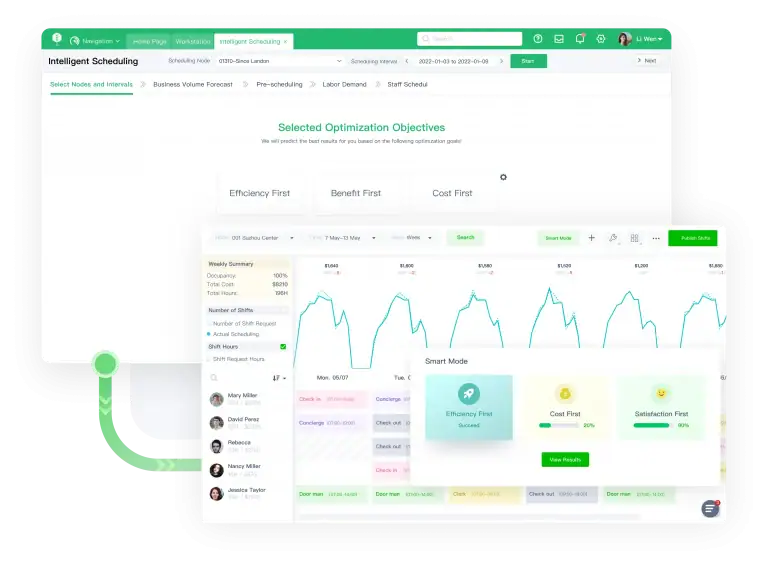
Modern Workforce Management (WFM) platforms replace guesswork with data. The GaiaWorks Algorithm Cloud analyzes your historical data—sales figures, foot traffic, or production orders—to predict your exact staffing needs down to 15-minute intervals.

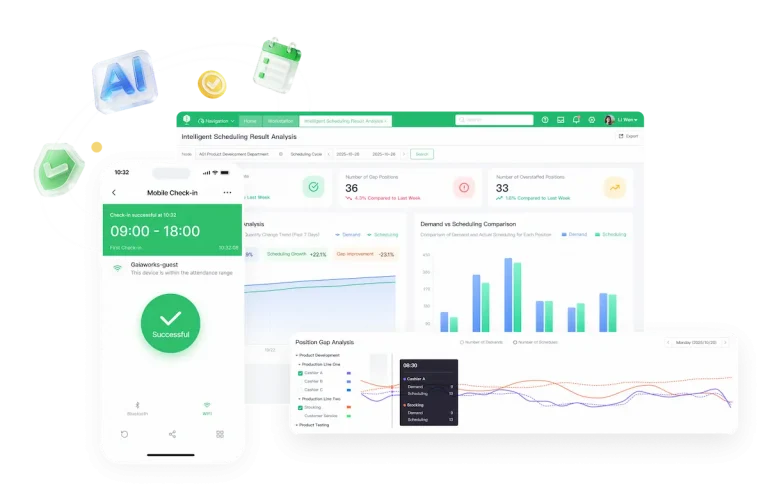
Dashboard showing how to decrease labor costs with AI forecasting.

Real-World Impact: A global fast-food chain saved an estimated $14M USD annually. By aligning staff levels strictly with demand, they were able to decrease labor costs significantly.

2. Eliminate “Time Theft” and Payroll Errors


Small errors add up fast. A few minutes of “buddy punching” or rounding errors in manual calculations can significantly inflate your payroll.

The Solution: Automated Time & Attendance

Digitizing your time tracking is the quickest win for cost control. GaiaWorks offers precise clock-in methods (GPS, Bluetooth, Face ID) and automatically calculates hours based on your specific pay rules.

  • Zero Calculation Errors: The system handles overtime, breaks, and holiday pay automatically.

  • Real-Time Visibility: Managers can see attendance anomalies instantly, not at the end of the month.

3. Proactively Control Unnecessary Overtime


Overtime is a helpful tool for emergencies, but it should never be a standard operating cost. If you are consistently relying on overtime to fill shifts, your scheduling process is broken.

The Solution: Compliance Guardrails

To decrease labor costs effectively, you need a preventative shield. The GaiaWorks Compliance Engine sets hard rules.With the GaiaWorks Compliance Engine, you can set hard rules that flag or block shifts that would trigger overtime pay.

  • Instant Alerts: If a manager tries to assign a shift that pushes an employee into overtime, the system warns them immediately before the cost is incurred.

4. Schedule by Skill, Not Just Availability


In manual scheduling, managers often just look for “warm bodies” to fill slots. However, putting a junior employee on a critical task can lead to slower output or quality issues, while putting a senior expert on a basic task is a waste of expensive talent.

The Solution: Skills-Based Scheduling

Optimize your labor spend by ensuring the right person is in the right place. GaiaWorks tracks the Skills & Certificates profile of every employee. The AI scheduling engine then assigns shifts based on proficiency, ensuring your most critical operations are staffed by your most capable people.

Real-World Impact: A global FMCG leader saw a 20% increase in productivity and a 50% reduction in quality errors simply by implementing skills-based scheduling.

5. Reduce the Hidden Cost of High Turnover


Recruiting, onboarding, and training a new frontline employee is expensive. The primary driver of turnover? Inflexible, unpredictable schedules that make employees feel like they have no control over their lives.

The Solution: Employee Empowerment Tools

Give your team flexibility, and they will reward you with loyalty. The GaiaWorks Mobile App empowers employees to:

  • View schedules in real-time.

  • Swap shifts with qualified colleagues autonomously.

  • Request time off easily.

When employees have control over their work-life balance, satisfaction goes up, and costly turnover goes down.


The Smart Way to Decrease Labor Costs


Controlling labor costs isn’t about squeezing your workforce; it’s about eliminating waste. By moving from reactive, manual processes to a proactive, AI-driven WFM strategy, you build a leaner, more profitable, and more resilient business.

Are you ready to stop guessing and start optimizing? Schedule a personalized demo with our experts today to discover how GaiaWorks can transform your workforce efficiency.


Eaton Transforms APAC Workforce Management, Saving 16,000 Hours Annually with GaiaWorks

Eaton Transforms APAC Workforce Management, Saving 16,000 Hours Annually with GaiaWorks

Global power management giant Eaton automated complex, localized HR rules across its diverse APAC operations, streamlining core processes and empowering its HR teams for strategic work with the GaiaWorks Workforce Management (WFM) platform.

Results at a Glance

  • Significant Efficiency Gains: Saved thousands of administrative hours annually, fundamentally optimizing regional workforce processes.
  • Strategic HR Focus: Freed HR teams, attendance clerks, and managers from high-volume manual data processing to focus on high-value strategic work.
  • Complex Localization Mastered: Successfully automated highly complex, localized rules, including 30+ unique overtime types in the Philippines and 8 distinct employee types in Taiwan.
  • Superior User Experience: Delivered a transformative process optimization, moving over 10,000 employees to a self-service, real-time, and efficient mobile experience.
  • Scalable APAC Blueprint: Established a unified, scalable WFM platform successfully deployed in China, the Philippines, and Taiwan, creating a blueprint for further regional expansion.

“This wasn’t just a system swap; we optimized the entire process. The GaiaWorks system brought great efficiency gains and a simple, efficient user experience to our employees, clerks, and HR team.”——— Director, HR Service Center, Eaton APAC

Two workers in hard hats and uniforms operating equipment inside a manufacturing plant, illustrating how smart scheduling for manufacturing optimizes the workforce

The Challenge: The Scale of Complexity in a Diverse Region

Eaton, a 113-year-old global power management leader, operates a vast network across 13 countries in the APAC region with nearly 20,000 employees.

As the company expanded, its HR teams faced immense operational challenges. The region’s diverse and complex labor laws created significant administrative burdens that its long-serving systems were not designed to handle automatically.

The complexity was a major business challenge:

  • Highly Complex Labor Laws: Each country presented unique compliance challenges. The Philippines, for example, has 18 types of public holidays and strict regulations monitored by the Department of Labor and Employment (DOLE). This includes over 30 different overtime calculation rules.
  • Diverse Workforce Needs: Operations varied significantly. Taiwan alone has 8 distinct employee types (including factory, office, and sales staff), each with unique attendance and scheduling rules.
  • Opportunities for Process Optimization: Manual processing for attendance, scheduling, and leave management was time-consuming for HR, managers, and employees alike, creating risks of data error and compliance issues.

Eaton needed a unified Workforce Management platform powerful enough to automate this extreme complexity and flexible enough to deliver a modern, mobile-first experience.

The Solution: A Unified WFM Engine Powered by GaiaWorks

Eaton’s APAC HR Service Center led a strategic initiative focused on process optimization. The goal was to re-engineer workflows from the ground up, not just “lift and shift” old functions to a new system.

Eaton selected the GaiaWorks Workforce Management (WFM) suite as its new, unified platform for the APAC region. The solution was configured to:

  1. Automate Complex Rules: The GaiaWorks platform was configured to automate the most difficult local requirements. At a factory in the Philippines, when a worker clocks out at 11:00 PM, the system now instantly applies the correct attendance rules, automatically determining the shift type, holiday status, and correct multiplier from over 30 possible types.
  2. Drive Process Efficiency: The system automated key areas by optimizing workflows (eliminating manual verifications), automating calculations (like leave quotas), and mobilizing approvals via the mobile app, drastically cutting process wait times.
  3. Unify Diverse Operations: The platform successfully managed the deep contrasts in Eaton’s operations, applying the correct, different rule sets for factory workers in Tainan and office staff in Taipei, all within one system.

The Results: A Transformative Leap in Efficiency and Experience

The impact of the GaiaWorks platform was both immediate and profound, establishing a new benchmark for Eaton’s digital transformation in the region.

1. Significant Efficiency Gains

The project’s primary success was the saving of thousands of administrative hours annually. This reclaimed time was a major strategic victory, allowing attendance clerks, supervisors, and HR teams to move from low-value data entry to high-value employee engagement and business support.

2. A Transformative Leap in User Experience

For over 10,000 employees, the system delivered a major upgrade.

  • Empowerment & Privacy: Employees gained self-service access to their data and could manage sensitive leave requests privately.
  • Modern Communication: Critical information moved from physical bulletin boards to precise, instant mobile push notifications.
  • High User Adoption: The new system was met with enthusiasm. The local team in the Philippines was so pleased that they recorded testimonial videos and handed out commemorative badges on launch day.

3. From a Regional Tool to a Global Benchmark

By conquering the immense complexity of APAC’s labor laws, the Eaton-GaiaWorks project has become a milestone in the company’s regional operations. It proved that a single WFM platform can drive efficiency, ensure compliance, and dramatically improve the employee experience across a diverse landscape.

Struggling with complex APAC labor laws and inefficient processes? Talk to our team to see how GaiaWorks can unify your operation.


Smart Scheduling for Manufacturing: Swire Coca-Cola Case Study

Smart Scheduling for Manufacturing: Swire Coca-Cola Case Study

Swire Coca-Cola deployed smart scheduling for manufacturing to solve its most complex labor challenge: automating multi-line, skilled-labor schedules. The GaiaWorks platform helped them meet peak season demand and boost efficiency—all without adding new staff.


Results at a Glance


  • Scheduling Time Slashed 97%: Reduced weekly scheduling time for complex multi-line operations from 4-6 hours to just 10 minutes.
  • Scaled Labor Sharing: Expanded the strategic “labor sharing” program from just 2 production lines to all 6 lines, unlocking new capacity.
  • Achieved 100% Accuracy: Ensured all schedules were 100% compliant with complex skills, rotations, and multi-layered labor rules.
  • Met Peak Demand Without New Hires: Increased production flexibility to manage seasonal peaks and boosted overall capacity using the existing skilled workforce.
  • Enhanced Employee Development: Enabled a transparent, multi-skilling framework and clear development paths, boosting employee satisfaction.

“Management philosophy and our foundational principles helped us get from 0 to 1. Smart scheduling (with GaiaWorks) helped us get from 1 to 10.”——— Swire Coca-Cola Management

1761818515278

The Challenge: The New Labor Problem in an Automated Factory


In the age of Industry 4.0, many assume workforce management problems disappear. Swire Coca-Cola’s advanced facility shows this isn’t true. The facility’s operation relies on a smaller, elite group of highly-skilled technicians, which creates two critical business challenges:

1. Peak Season Demand: The beverage business is highly seasonal. This creates intense peak seasons where the factory must produce more.

2. Skilled Labor Scarcity: The required technicians are difficult to find and train. The factory cannot simply hire temporary staff to meet peak demand.

The strategic answer was internal “labor sharing”—borrowing skilled staff from less-busy lines to support high-demand lines.

This created the real challenge: Extreme Scheduling Complexity.

  • Intricate Rules: The factory runs a “3-shift, 2-rotation” system.
  • Skill Matching: Planners must match the precise skill and proficiency level for each borrowed employee.
  • Layered Constraints: The schedule must obey dozens of prioritized “strong” and “non-strong” rules (e.g., skill limits, hour limits, overtime caps, consecutive rest preferences, etc.).

This complexity made the strategy impossible to scale. Manually creating a schedule for just two lines took 4-6 hours per week and was still not 100% accurate.


The Solution: GaiaWorks’ Smart Scheduling for Manufacturing in Action


Swire Coca-Cola had the right management philosophy but needed a technology engine to execute it. They launched the GaiaWorks Smart Scheduling module to automate their “labor sharing” initiative.

This smart scheduling for manufacturing solution was configured to:

1. Automate All Rules: The system digitized all of Swire Coca-Cola’s complex rules—from “strong” constraints like skill matching to “non-strong” preferences like minimizing disruptions.

2. Optimize Shared Labor: The engine automatically finds the optimal, 100% compliant schedule, identifying which employees to borrow from which lines based on availability, skills, and business priority.

3. Manage Skills: The solution provided a digital “skill tag” management system, giving planners instant visibility into who was qualified for which role.


The Results: 4 Key Wins for from “Impossible” to “Effortless”


The impact of the GaiaWorks platform was transformative, allowing Swire Coca-Cola to finally scale its core labor strategy.

1. Immediate Efficiency & Accuracy

The 4-6 hour manual scheduling nightmare vanished. The process now takes 10 minutes, and the resulting schedule is 100% accurate and compliant.


2. Strategic Scalability (The “1 to 10” Leap)

With automation, Swire Coca-Cola expanded its “labor sharing” program from the initial 2 lines to all 6 production lines.


3. Capacity & Cost Control

By efficiently sharing its existing skilled workforce, the factory boosted its overall production capacity and met peak seasonal demand without hiring a single new employee.


4. Enhanced Employee Experience

The platform provided a clear, online system for managing skills, allowing employees to pursue new development paths and increasing their satisfaction and retention.


Struggling with complex schedules? See how GaiaWorks’ smart scheduling for manufacturing can automate your operations.


Alfa Laval Transforms Workforce Management with GaiaWorks, Slashing T&A Processing by 70% and Fueling ESG Goals

Alfa Laval Transforms Workforce Management with GaiaWorks, Slashing T&A Processing by 70% and Fueling ESG Goals

Alfa Laval, a global industrial leader, consolidated 9 disparate systems into one unified GaiaWorks workforce management platform, saving 6.1 FTEs and cutting 7,582 kg of carbon emissions annually.

Results at a Glance


  • System Integration: 9 fragmented HR systems consolidated into 1 unified GaiaWorks platform.
  • Efficiency Gains: Time & Attendance (T&A) processing time slashed from 1,504 to 449 hours (a 70% reduction).
  • Manpower Savings: Reduced workload equivalent to 6.1 FTEs.
  • ROI & ESG: E-signature module saves 6,286 hours and ~20,000 RMB annually, eliminating 7,582 kg of carbon emissions.
  • Compliance & UX: Proactive compliance issues reduced from 8 to 2, while employee user satisfaction surged to 4.5/5.

“With GaiaWorks, we consolidated 9 systems into one. Our T&A processing time fell by 70%, and our e-signature module alone saved us over 6,200 hours. We didn’t just gain efficiency; we improved compliance, sustainability, and boosted user satisfaction to 4.5 out of 5.”

— Wang Hui, Head of HR SSC & Country HR Manager, Alfa Laval China

Alfa Laval worker

The Challenge: Fragmented Systems and Poor Workforce Management


Alfa Laval is a 140-year-old Swedish industrial giant. The company operates globally with a deep-rooted commitment to sustainability. However, in China, this vision was being challenged by operational reality.

Its China operations were running in silos. For example, the HR department used nine different, disconnected systems for time & attendance, scheduling, leave, travel, and payroll.

This fragmented approach to workforce management created significant business challenges:

  • No Visibility: Management had no unified view of frontline operations, making it impossible to share resources (like specialized welders) between plants, leading to redundant hiring.
  • High Inefficiency: Manual, paper-based approval processes were slow and opaque. Employees couldn’t even check their own leave balances accurately without asking HR.
  • Data & Compliance Risk: Data was entered multiple times across systems, leading to high error rates and significant compliance risks.

This operational chaos was unacceptable to Wang Hui, Head of Alfa Laval China’s HR Shared Service Center (HRSSC). Her team, operating as a “Problem Solving Center”. Therefore, they knew that transformation was necessary to align operations with the company’s core values of efficiency and sustainability.


The Solution: A New Workforce Management Process Powered by GaiaWorks


The transformation was not just about technology; it was about process. Before implementation, Wang Hui’s team led a 10-month “process re-engineering battle.”

They mapped and standardized workflows for all 3,000 employees. This resulted in 19 master processes, 12 approval matrices, and 40 sub-policies.

With this new foundation, Alfa Laval selected and implemented the GaiaWorks Workforce Management (WFM) suite as its single, unified platform. The GaiaWorks system was configured to:

  • Unify Operations: Consolidate all T&A, scheduling, and leave management for all Chinese sites.
  • Handle Complexity: Automate complex rules, such as cross-day night shift calculations and plant-specific overtime policies.
  • Standardize Approvals: Enforce new, standardized approval flows, pushing the organization toward best practices.

Concurrently, the team built a comprehensive HR Knowledge Base. This creates a “single source of truth” for all process-related questions, and proved invaluable for future change management.


The Results: A New Workforce Management Engine for Efficiency and Sustainability

The impact of the GaiaWorks workforce management platform was immediate and measurable. It delivered transformative results across the board.

1.Massive Efficiency Gains

The most dramatic impact was on efficiency. By automating T&A processing, the team slashed processing time by 70% (from 1,504 to 449 hours). This saved the equivalent of 6.1 FTEs, allowing the HRSSC to focus on high-value strategic work instead of manual data entry.

2.Hard Savings & ESG Impact

The new e-signature module alone saves 6,286 administrative hours per year. This initiative, which saves nearly 20,000 RMB in material costs, was also calculated as a 7,582 kg reduction in carbon emissions, contributing directly to Alfa Laval’s global “Go Green” ESG targets.

3.Stronger Governance & Compliance

The unified system provided unprecedented transparency. The number of compliance issues flagged during audits dropped from 7-8 to just 2 (with the remaining two being HQ-level issues).

4.Superior User Experience

With a single, accurate platform, employee user satisfaction surged to 4.5 out of 5. Trust in the company increased as policies became transparent and data became reliable.

For Alfa Laval, the GaiaWorks platform became the engine that finally connected its day-to-day operations with its long-term strategic goals, proving that digital transformation and sustainability are two sides of the same coin.

Learn more about GaiaWorks’ workforce management solutions for manufacturing here.