CUSTOMER STORY
F Factory: Boosting HR Productivity by 75% with GaiaWorks Smart Scheduling
75%
HR Efficiency
Time spent on attendance processing was slashed by 75% through automated digital approvals.
30%
Skill Reserve
Established a 30% multi-skilled reserve for critical roles to handle peak seasonal shifts.
Equitable
Workloads
Eliminated extreme hour disparities, narrowing the gap between underutilized and over-leveraged staff.
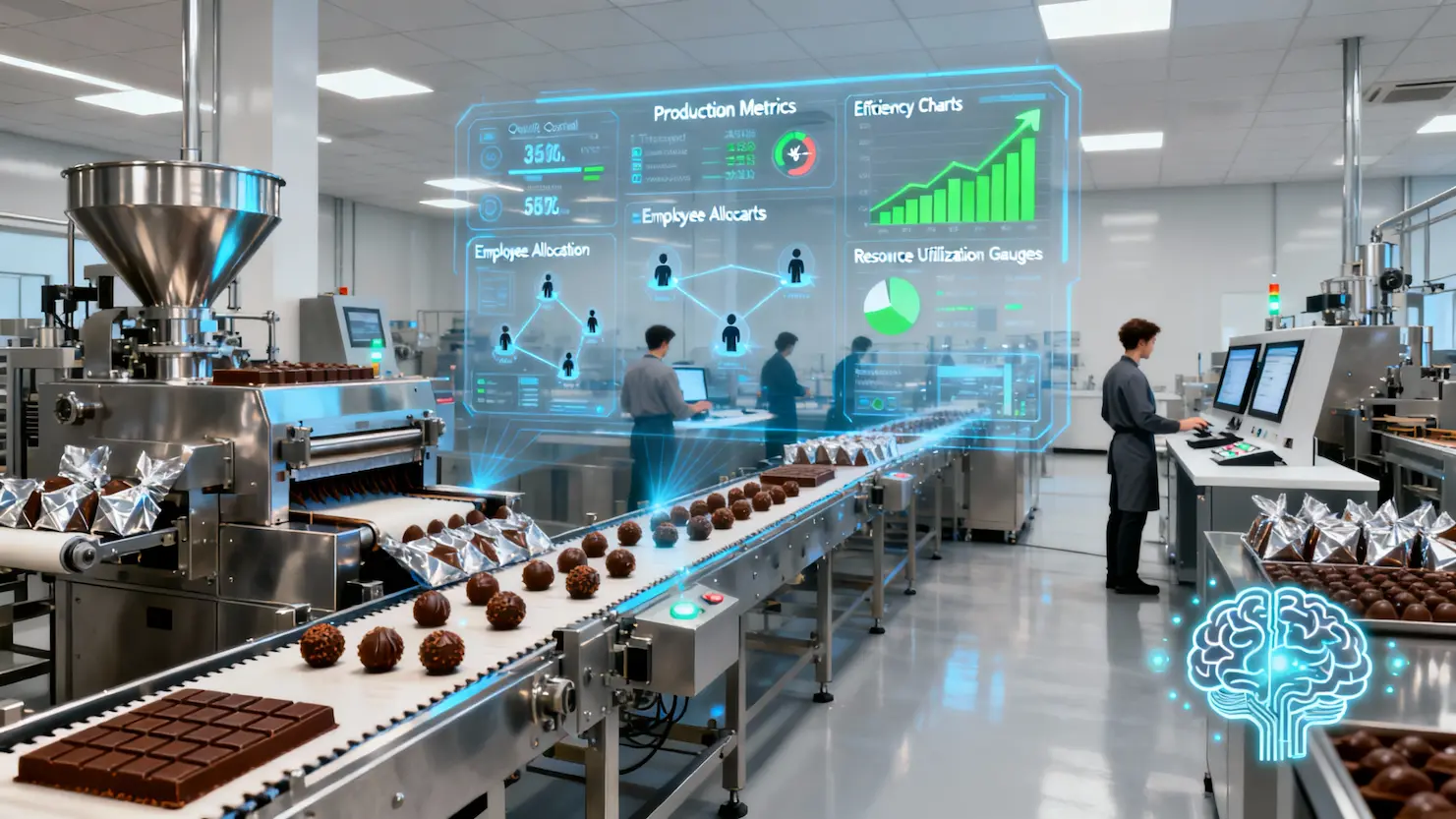
For F Factory, the renowned China-based production hub of a leading Italian chocolate brand, the sweet taste of success comes with a complex recipe: balancing seasonal production peaks with stringent targets for frontline workforce efficiency, cost control, and critically, fostering employee fairness and stability.
This case study reveals how F Factory partnered with GaiaWorks to implement AI-powered Smart Scheduling and Time & Attendance solutions. The objective: to not only optimize labor deployment but also to cultivate a more equitable, skilled, and stable workforce.
The impact has been profound, yielding both operational excellence and a stronger foundation for employee relations:
1. Enhanced Employee Fairness & Stability: Significantly more balanced monthly working hours and reduced income disparity for frontline staff.
2. Optimized Resource Utilization & Waste Reduction: Accurate planning for shuttle and canteen services, minimizing unnecessary resource expenditure.
3. Reduced Overtime Costs & Increased Efficiency: Streamlined operations and lower labor costs during peak seasons.
4. Advanced Workforce Agility: Development and strategic deployment of a multi-skilled workforce.
5. Improved Management & Transparency: Real-time data visibility, digitalized approvals, and data-driven decision-making, reducing subjective biases.
6. Boosted HR Productivity: Time spent on attendance processing reduced by 75%.
This case study reveals how F Factory partnered with GaiaWorks to implement AI-powered Smart Scheduling and Time & Attendance solutions. The objective: to not only optimize labor deployment but also to cultivate a more equitable, skilled, and stable workforce.
The impact has been profound, yielding both operational excellence and a stronger foundation for employee relations:
1. Enhanced Employee Fairness & Stability: Significantly more balanced monthly working hours and reduced income disparity for frontline staff.
2. Optimized Resource Utilization & Waste Reduction: Accurate planning for shuttle and canteen services, minimizing unnecessary resource expenditure.
3. Reduced Overtime Costs & Increased Efficiency: Streamlined operations and lower labor costs during peak seasons.
4. Advanced Workforce Agility: Development and strategic deployment of a multi-skilled workforce.
5. Improved Management & Transparency: Real-time data visibility, digitalized approvals, and data-driven decision-making, reducing subjective biases.
6. Boosted HR Productivity: Time spent on attendance processing reduced by 75%.
The Challenge: A Mix of Operational Inefficiencies and Workforce Disparities
As a major chocolate producer, F Factory navigates the inherent “ebb and flow” of seasonal demand. This dynamic environment, coupled with existing management practices, presented a multi-layered challenge that impacted both operational efficiency and critical employee welfare:
1. Workforce Disparities – Uneven Workloads and Employee Instability:
Drastic Labor Hour Disparities: Some employees worked over 250 hours monthly, while others struggled to reach 150 hours. This stark “feast or famine” situation directly undermined F Factory’s desire for employee fairness and balanced labor hours.
Income Disparity & Instability: Imbalanced hours led to significant income gaps, fostering dissatisfaction and potential talent attrition in off-peak lines, leading to a lack of workforce stability.
Suboptimal Resource Deployment: Peak seasons brought unsustainable overtime costs for some lines, while others faced underutilization and the risk of losing skilled staff.
2. Management Gaps – Lack of Transparency and Inefficient Processes:
Lagging Data & Poor Planning: The existing manual scheduling and record-keeping system offered no real-time insights, hindering proactive planning and efficient adaptation to production changes.
Paper-Based Approval Bottlenecks: Manual, lengthy approval processes for leave, shift changes, and overtime requests were cumbersome, prone to delays, and lacked integration with real-time production needs, impacting administrative efficiency and transparency.
Subjective Decision-Making: Scheduling heavily relied on individual manager experience and familiarity, leading to biased shift allocations and an inability for HR to objectively assess staffing needs or talent capabilities. This lack of data-driven insight perpetuated inequalities.
3. Operational Waste – Undermining Efficiency:
Over-Provisioned Resources: Unpredictable scheduling led to over-provisioning of vital support services like shuttle buses and canteen meals to avoid shortages. This resulted in unnecessary waste and increased operational costs.
F Factory recognized the need for a comprehensive Workforce Management (WFM) system that could not only optimize production but also fundamentally improve employee welfare, fairness, and resource efficiency. They initiated a smart scheduling project to integrate employee skills with dynamic, data-driven shift planning.
1. Workforce Disparities – Uneven Workloads and Employee Instability:
Drastic Labor Hour Disparities: Some employees worked over 250 hours monthly, while others struggled to reach 150 hours. This stark “feast or famine” situation directly undermined F Factory’s desire for employee fairness and balanced labor hours.
Income Disparity & Instability: Imbalanced hours led to significant income gaps, fostering dissatisfaction and potential talent attrition in off-peak lines, leading to a lack of workforce stability.
Suboptimal Resource Deployment: Peak seasons brought unsustainable overtime costs for some lines, while others faced underutilization and the risk of losing skilled staff.
2. Management Gaps – Lack of Transparency and Inefficient Processes:
Lagging Data & Poor Planning: The existing manual scheduling and record-keeping system offered no real-time insights, hindering proactive planning and efficient adaptation to production changes.
Paper-Based Approval Bottlenecks: Manual, lengthy approval processes for leave, shift changes, and overtime requests were cumbersome, prone to delays, and lacked integration with real-time production needs, impacting administrative efficiency and transparency.
Subjective Decision-Making: Scheduling heavily relied on individual manager experience and familiarity, leading to biased shift allocations and an inability for HR to objectively assess staffing needs or talent capabilities. This lack of data-driven insight perpetuated inequalities.
3. Operational Waste – Undermining Efficiency:
Over-Provisioned Resources: Unpredictable scheduling led to over-provisioning of vital support services like shuttle buses and canteen meals to avoid shortages. This resulted in unnecessary waste and increased operational costs.
F Factory recognized the need for a comprehensive Workforce Management (WFM) system that could not only optimize production but also fundamentally improve employee welfare, fairness, and resource efficiency. They initiated a smart scheduling project to integrate employee skills with dynamic, data-driven shift planning.
The Solution: Crafting a Fairer, More Agile Workforce with AI and Skills Management
GaiaWorks’ Smart Scheduling and Real-time Attendance modules offered F Factory a holistic approach. Crucially, this digital transformation was complemented by a robust internal multi-skilled employee development program, directly supporting their workforce stability goals.
1. Smart Scheduling: Driving Efficiency and Employee Equity
The GaiaWorks system dynamically integrates employee skill sets, accumulated work hours, and real-time production demands. It automatically assigns shifts, prioritizing the deployment of multi-skilled employees to lines with peak needs while ensuring a more equitable distribution of work hours across the entire blue-collar workforce.
Achieving Labor Hour Equity: The system actively mitigates extreme disparities in monthly work hours, moving F Factory significantly closer to its goal of employee fairness and balanced labor hours.
Proactive Resource Deployment: By leveraging real-time data, the system optimizes resource sharing, transforming reactive staffing into a strategic, data-driven process.
2. Multi-Skilled Employee Empowerment: Building a Sustainable Workforce
F Factory’s HR department implemented a comprehensive program to cultivate a flexible, multi-skilled workforce—a cornerstone for agile operations and enhanced employee stability:
Incentivizing Versatility: Employees receive priority in promotions and “support bonuses” for cross-line deployments, fostering a culture where skills development directly links to career progression and income stability, reinforcing employee welfare.
Certifying Multi-Skills: The program targets a 30% reserve rate for critical positions. Certified skills are updated in the talent development system, which then feeds into the Smart Scheduling system.
Data-Driven Skill Deployment: The scheduling system utilizes this updated skill data, alongside cumulative work hours and compliance rules, to calculate optimal shift priorities, facilitating true shared deployment. This intelligently narrows work hour gaps across different lines and fosters greater equity within the workforce.
3. Transparent & Efficient Management with Real-time Data
Real-time Reporting for HR & Management: The Smart Scheduling system provides detailed monthly employee scheduling reports by position. These reports offer HR direct, objective insights into:
Digitalized Approvals & Enhanced Transparency: Leave, shift transfers, and overtime requests are now managed digitally, drastically reducing paperwork and processing time. This promotes transparency and efficiency in administrative processes. Management gains real-time visibility, allowing for prompt, informed approvals aligned with production needs.
Employee Self-Service & Empowerment: Employees can access their leave balances, schedules, and work hour accounts via the system, enabling immediate discrepancy checks. This fosters employee empowerment and transparency.
4. Operational Optimization & Reduced Resource Waste
Minimizing Waste: Real-time scheduling data provides accurate input for planning shuttle bus and canteen resources. By virtually eliminating over-provisioning due to unpredictable changes, F Factory significantly reduces unnecessary waste, improving operational efficiency and cost management.
1. Smart Scheduling: Driving Efficiency and Employee Equity
The GaiaWorks system dynamically integrates employee skill sets, accumulated work hours, and real-time production demands. It automatically assigns shifts, prioritizing the deployment of multi-skilled employees to lines with peak needs while ensuring a more equitable distribution of work hours across the entire blue-collar workforce.
Achieving Labor Hour Equity: The system actively mitigates extreme disparities in monthly work hours, moving F Factory significantly closer to its goal of employee fairness and balanced labor hours.
Proactive Resource Deployment: By leveraging real-time data, the system optimizes resource sharing, transforming reactive staffing into a strategic, data-driven process.
2. Multi-Skilled Employee Empowerment: Building a Sustainable Workforce
F Factory’s HR department implemented a comprehensive program to cultivate a flexible, multi-skilled workforce—a cornerstone for agile operations and enhanced employee stability:
Incentivizing Versatility: Employees receive priority in promotions and “support bonuses” for cross-line deployments, fostering a culture where skills development directly links to career progression and income stability, reinforcing employee welfare.
Certifying Multi-Skills: The program targets a 30% reserve rate for critical positions. Certified skills are updated in the talent development system, which then feeds into the Smart Scheduling system.
Data-Driven Skill Deployment: The scheduling system utilizes this updated skill data, alongside cumulative work hours and compliance rules, to calculate optimal shift priorities, facilitating true shared deployment. This intelligently narrows work hour gaps across different lines and fosters greater equity within the workforce.
3. Transparent & Efficient Management with Real-time Data
Real-time Reporting for HR & Management: The Smart Scheduling system provides detailed monthly employee scheduling reports by position. These reports offer HR direct, objective insights into:
Digitalized Approvals & Enhanced Transparency: Leave, shift transfers, and overtime requests are now managed digitally, drastically reducing paperwork and processing time. This promotes transparency and efficiency in administrative processes. Management gains real-time visibility, allowing for prompt, informed approvals aligned with production needs.
Employee Self-Service & Empowerment: Employees can access their leave balances, schedules, and work hour accounts via the system, enabling immediate discrepancy checks. This fosters employee empowerment and transparency.
4. Operational Optimization & Reduced Resource Waste
Minimizing Waste: Real-time scheduling data provides accurate input for planning shuttle bus and canteen resources. By virtually eliminating over-provisioning due to unpredictable changes, F Factory significantly reduces unnecessary waste, improving operational efficiency and cost management.
The Outcome: A Sweet Future of Sustainable Operations and Enhanced Employee Relations
By integrating robust skills management with AI-powered smart scheduling, F Factory has profoundly transformed its blue-collar workforce management, achieving significant gains in operational efficiency and, critically, fostering a fairer and more stable workforce.
1. Enhanced Employee Welfare: Achieved greater labor hour equity and reduced income disparity, leading to a more stable and satisfied workforce.
2. Improved Operational Efficiency: Implemented data-driven, objective decision-making, moving away from subjective biases, and improving resource utilization.
3. Reduced Costs: Minimized overtime expenses and unnecessary resource waste.
4. Agile & Skilled Workforce: Developed a resilient workforce capable of adapting to fluctuating demands.
This partnership with GaiaWorks has not only optimized F Factory’s production efficiency but has also strengthened its commitment to being a responsible, sustainable employer. As skills management and smart scheduling continue to evolve, F Group is charting a course towards a future where operational excellence and strong employee relations are perfectly harmonized.
Effective scheduling is the bridge between production efficiency and employee satisfaction.
See how GaiaWorks can help your manufacturing facility balance workloads and reduce administrative waste.
1. Enhanced Employee Welfare: Achieved greater labor hour equity and reduced income disparity, leading to a more stable and satisfied workforce.
2. Improved Operational Efficiency: Implemented data-driven, objective decision-making, moving away from subjective biases, and improving resource utilization.
3. Reduced Costs: Minimized overtime expenses and unnecessary resource waste.
4. Agile & Skilled Workforce: Developed a resilient workforce capable of adapting to fluctuating demands.
This partnership with GaiaWorks has not only optimized F Factory’s production efficiency but has also strengthened its commitment to being a responsible, sustainable employer. As skills management and smart scheduling continue to evolve, F Group is charting a course towards a future where operational excellence and strong employee relations are perfectly harmonized.
Effective scheduling is the bridge between production efficiency and employee satisfaction.
See how GaiaWorks can help your manufacturing facility balance workloads and reduce administrative waste.